Book Shelf: “The Essential Garden Book”
Terence Conran and Dan Pearson’s follow-up to the legendary House Book.


Two of my most-prized and most-thumbed books are Terence Conran’s iconic The House Book (1974) and its sequel, The Essential House Book (1994), so imagine my joy when I stumbled across a well-loved hardcopy of The Essential Garden Book (1998, with Dan Pearson) in a used-book store last Fall. I had coveted and pored over an older mentor-friend’s copy of The House Book as a teenager, and excitedly bought myself the paperback Essential as a young apartment dweller when it first appeared. Then hunted down my own vintage copy of The House Book years later. I have spent a lot of time with books in the “shelter” category — and have written/edited and photo edited more than a dozen of them — and I can’t name a more inspiring-meets-informative volume than either of the two. Decades after they first published, I’m still inspired every time I crack them open. Having spent a few hours with The Essential Garden Book over the weekend, I can without surprise or hesitation say the same about it.
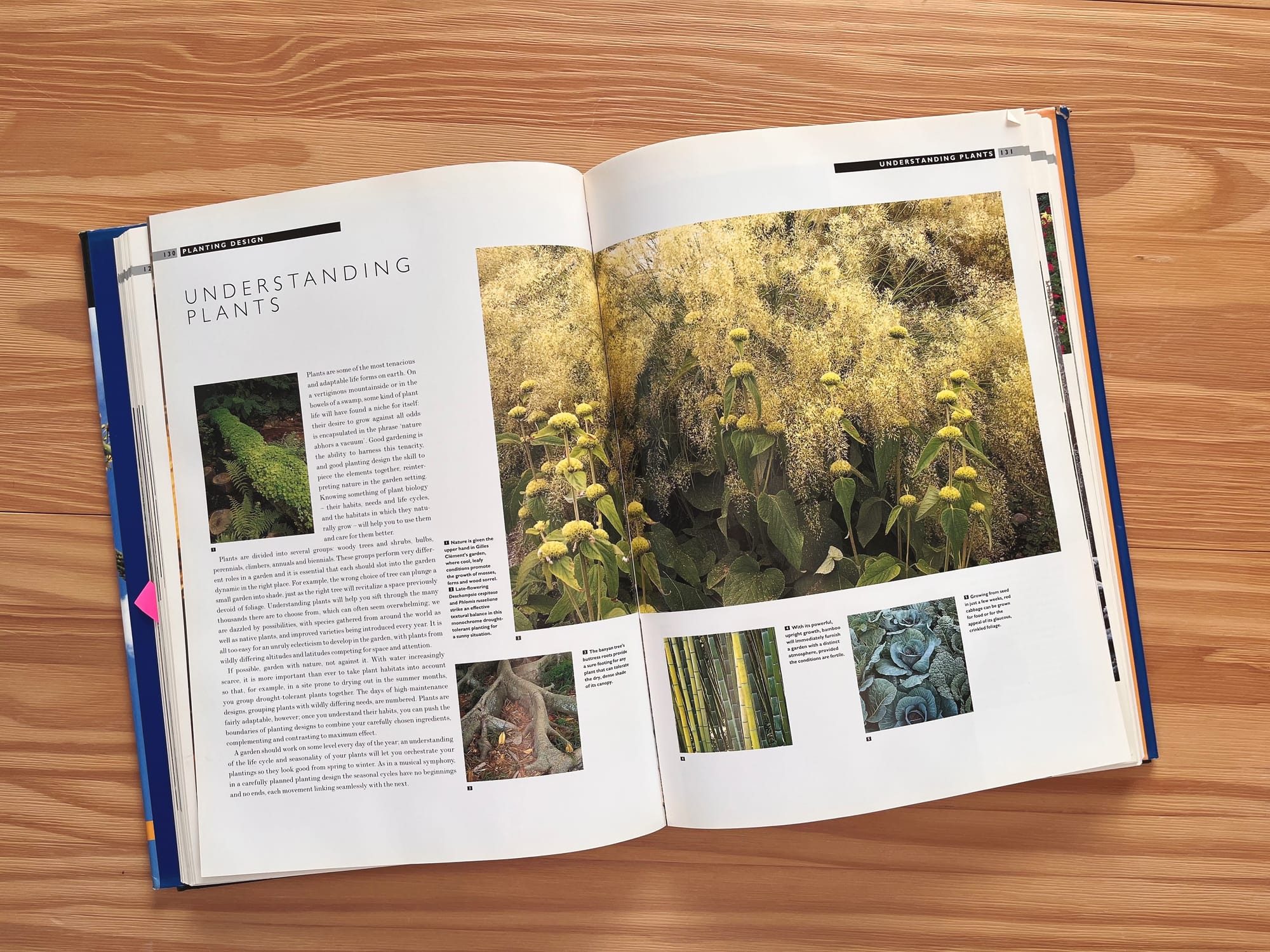
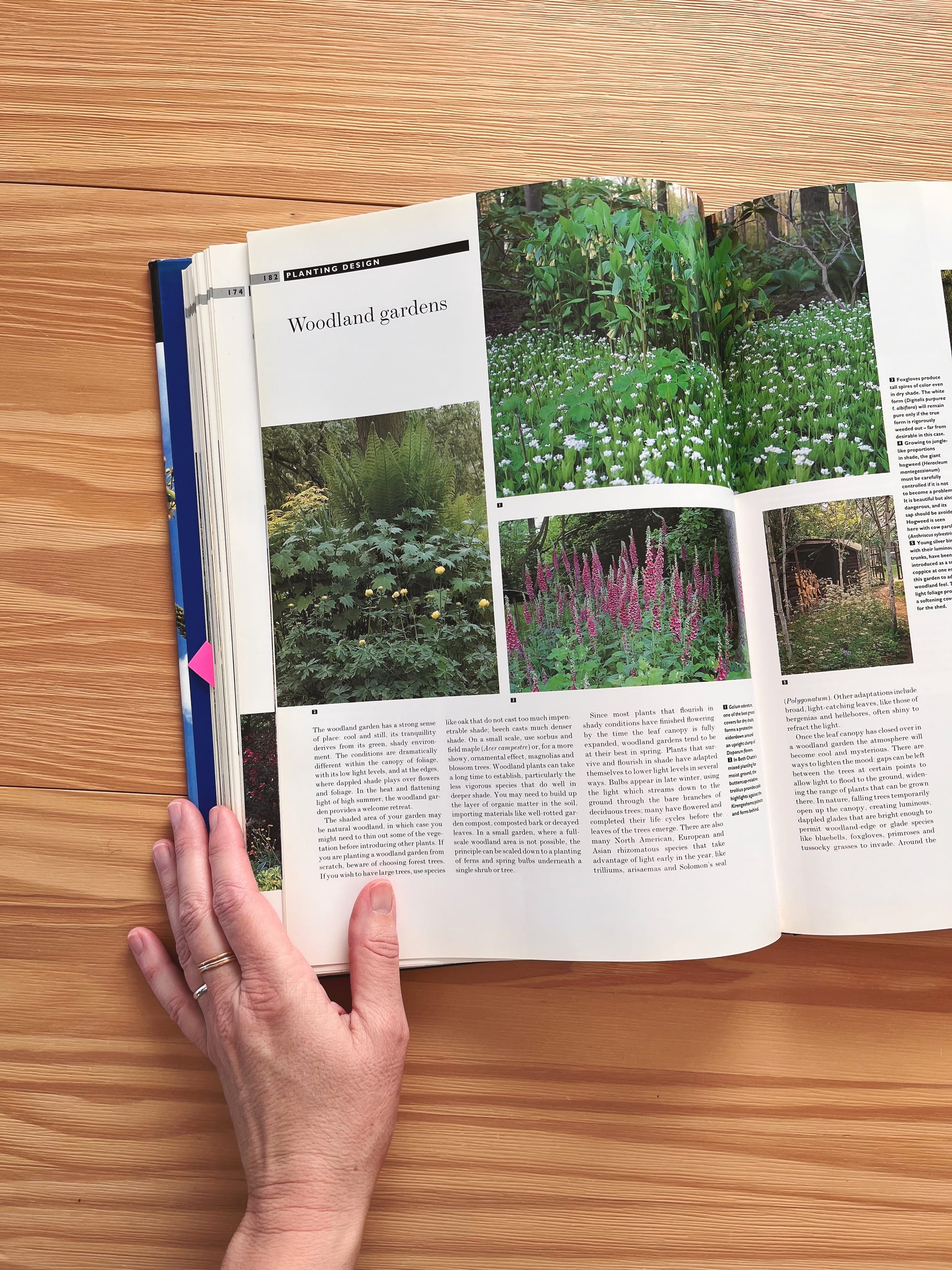
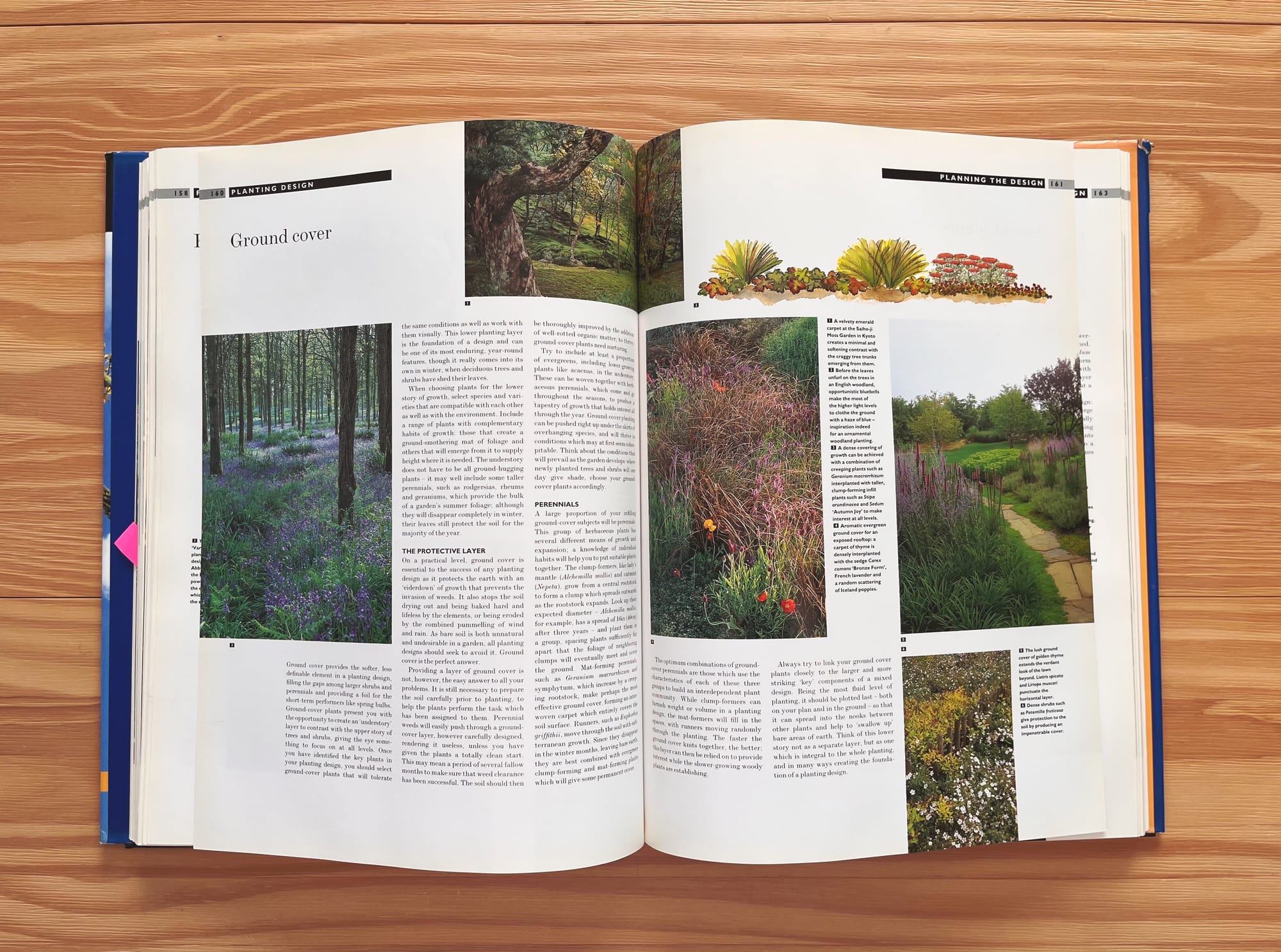
The layout is identical to its predecessor: large-format pages packed with genuinely educational text and wide-ranging photos, each one demonstrating a key point. Over the course of the book, you get a complete survey of garden intel — from plant traits and types, to garden design and infrastructure, to the how-to’s of actual garden work. There are lots of ways to engage with it: A new gardener might read it cover to cover for all the big-picture guidance it provides; a seasoned one might study the copious photos and captions for whatever ideas they might spark. Anyone might turn to the pages on any given subject for a refresher or bit of insight on a particular situation from time to time, such as when seeking ideas for making an entrance or paving a pathway.
I don’t know what Dan Pearson’s stature was in the garden-design world of 1998, but he’s a big name here in the future, and he’s credited with the two meatiest chapters of the book, which together offer an extremely thorough introduction to garden design thinking and strategy. I signed up for Create Academy during a sale in December, and all I’ve watched so far are some of the introductory clips of Pearson’s class, which have left me impatient for a closer look at his own sprawling garden, called Home Farm. So I was pretty thrilled to find multiple spreads of beautiful images of the place — as it existed in the late 1990s — nestled into this book.
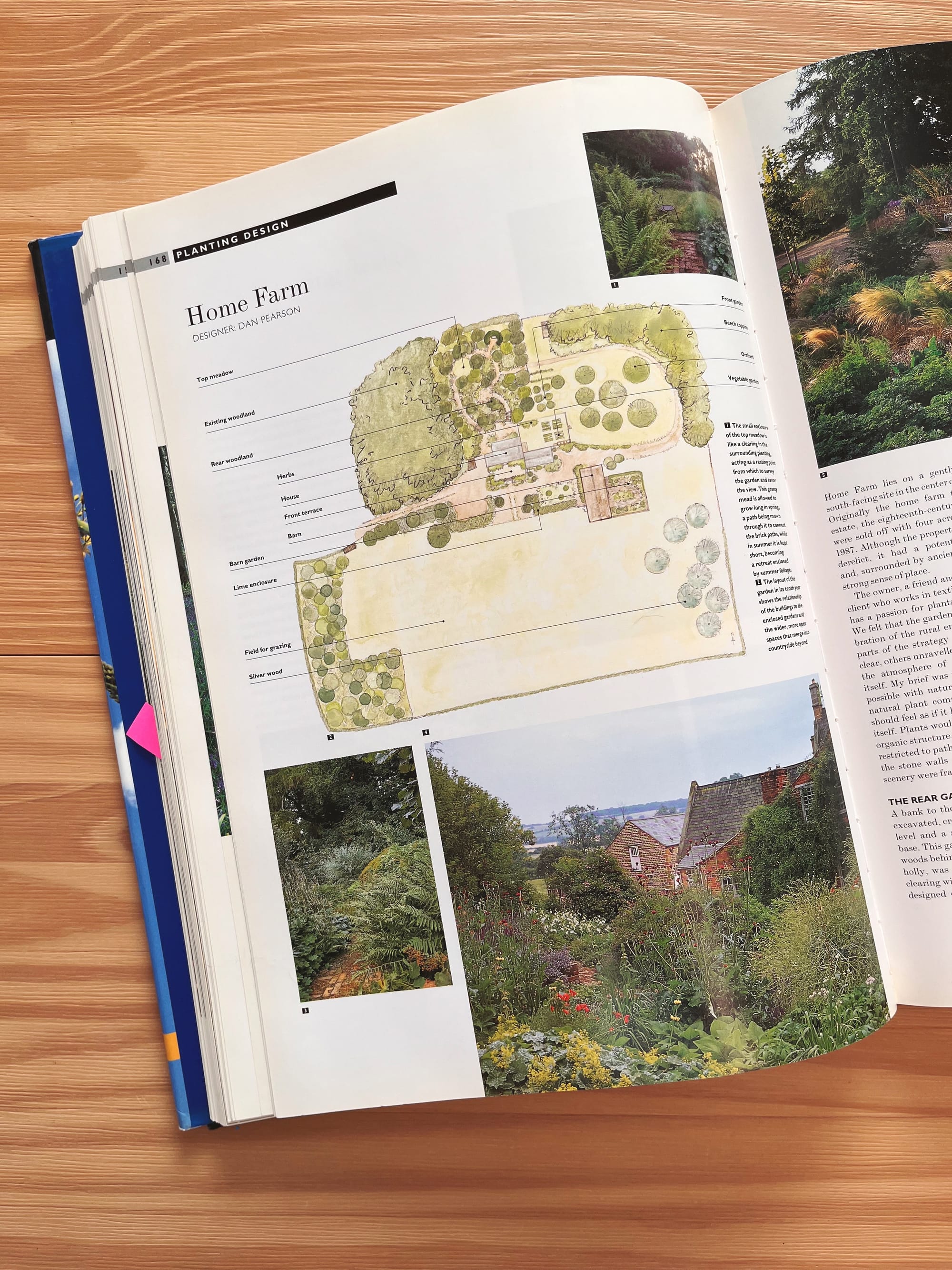
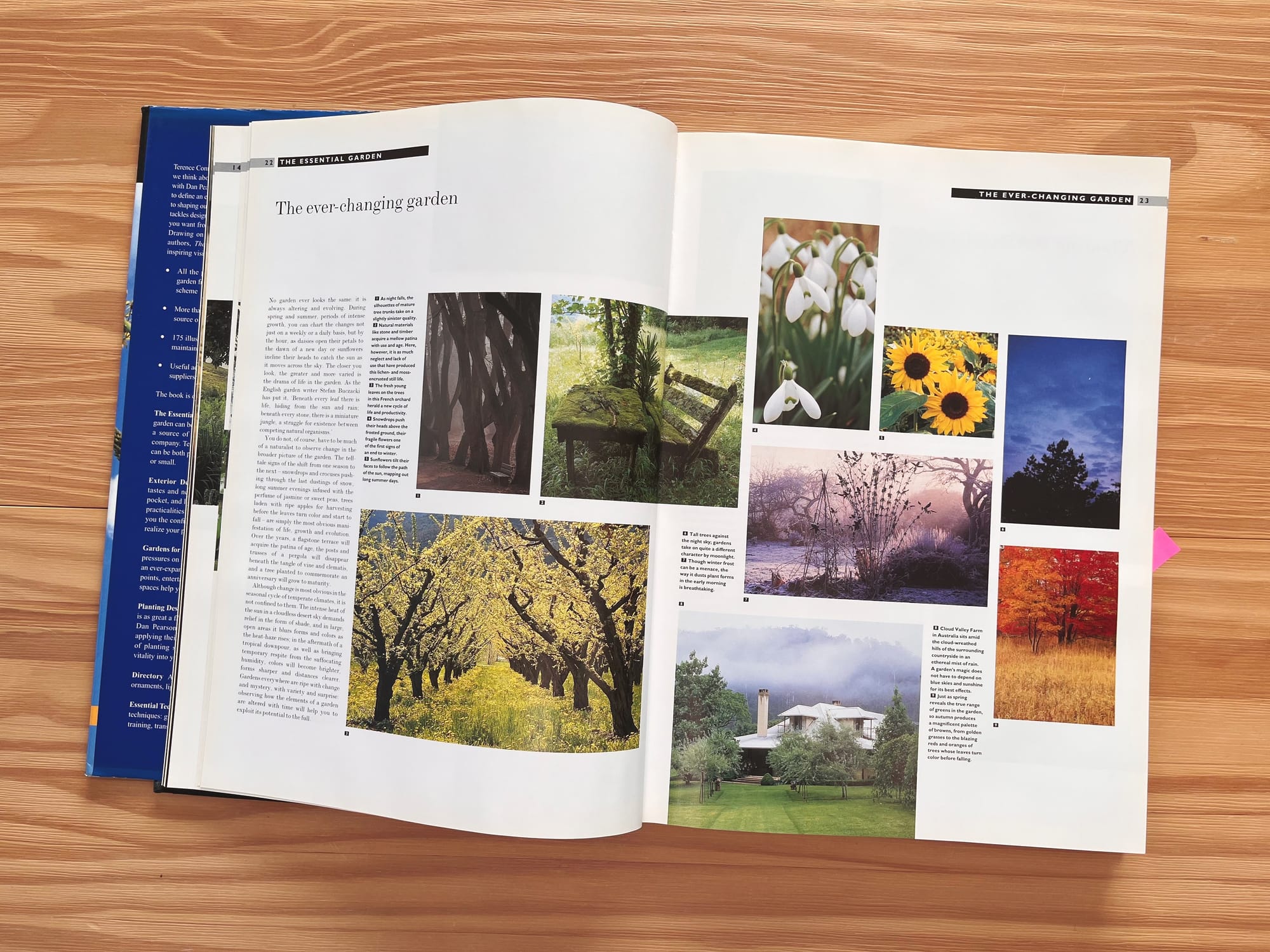
While Pearson’s is the only other name on the cover (alongside Sir Terence’s), additional chapters are credited to Andrew Wilson, Jennifer Potter, Isabelle Van Groeningen and Richard Key. But I want to give a particular shout-out to ‘Picture Researcher’ Claire Taylor, aka photo editor. As with the two other Conran books above, the photos (and captions) do a ton of heavy lifting, encompassing a wide range of styles and specifics. And it’s mind-blowing how few of them seem even remotely dated, nearly 30 years later. They’re just that well-chosen.
(In the sense that a very small number of them are attributed to their designers, who happened to be huge at the time — Steve Martino, Oehme Van Sweden ...— it did date it for me, taking me back to a particular moment when I was a gardenless twentysomething studying the magazines. But that’s an edge case!)
The only complaint I have about the book is a mild one: It is really really big, which is what makes it so accommodating of the wealth of images, but also makes it challenging to engage with. You basically have to sit at a table with it open in front of you. But like I said, mild complaint. Your complaint for me might be that it is long out-of-print, but I absolutely encourage you to search the internet or just be on the lookout for it anytime you venture into a used shop. It’s a bonafide gem.