On My List: Early Bloomers
Gorgeous native alternatives to my favorite imported bulbs.

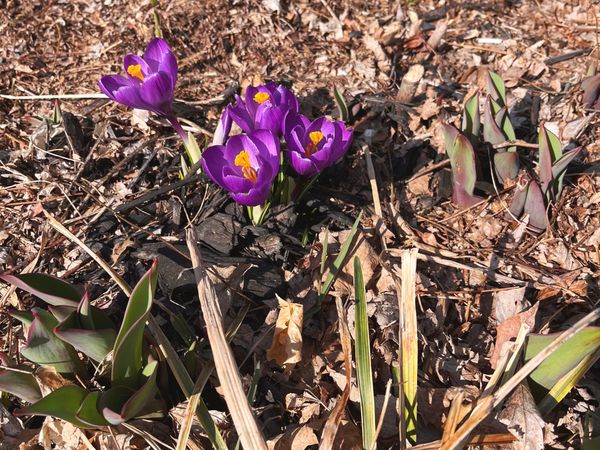
Although I’m generally more foliage-motivated than flower-motivated, right now I’d give just about anything for some little drifts of low-growing early bloomers out there — as the shrubs and trees are still testing their tiny leaflets and clinging to their tight buds. Last fall, I kept saying I wanted to get ahold of a few crocus bulbs to stick in the ground, simply to have something springing to life as early as possible in the new year. I did not get it done, but sometimes things happen (or don’t) for a reason. No knock against the lovely crocus, but as I’m being fed images of assorted very-early bloomers in other people’s gardens — especially the North American natives — I’ve begun forming a more deliberate shortlist of little gems I want in my garden that actually belong here and can provide early sustenance to the local pollinators. Unlike bulbs, which I could put off until fall again, as I had been planning, these I think I’ll have to be on the hunt for right away. The challenge is getting my hands on any of them (existential question: how to buy an ephemeral), but the nursery that I expect will be my likeliest local source will be open again by the end of the week. So I’ll know more soon—
1) Hepatica, sharp- or round-lobed (Hepatica nobilis var. acuta or obtusa, Anemone acutiloba or americana)
Very similar to the wood anemone and rue anemone already on my wish list, these tiny cuties (up to 8" tall) bloom in March/April on lone, fuzzy stems poking up through the leaf litter. Unlike the wood anemone, which is a spring ephemeral, the hepatica’s semi-evergreen foliage hangs on through winter and dies back just before the bloom, then reappears for the rest of the year, where it’s apparently a slow spreader and tolerant of dry shade. They can apparently also range from white and light pinks into blue-purples, making them a great native alternative to the crocus.
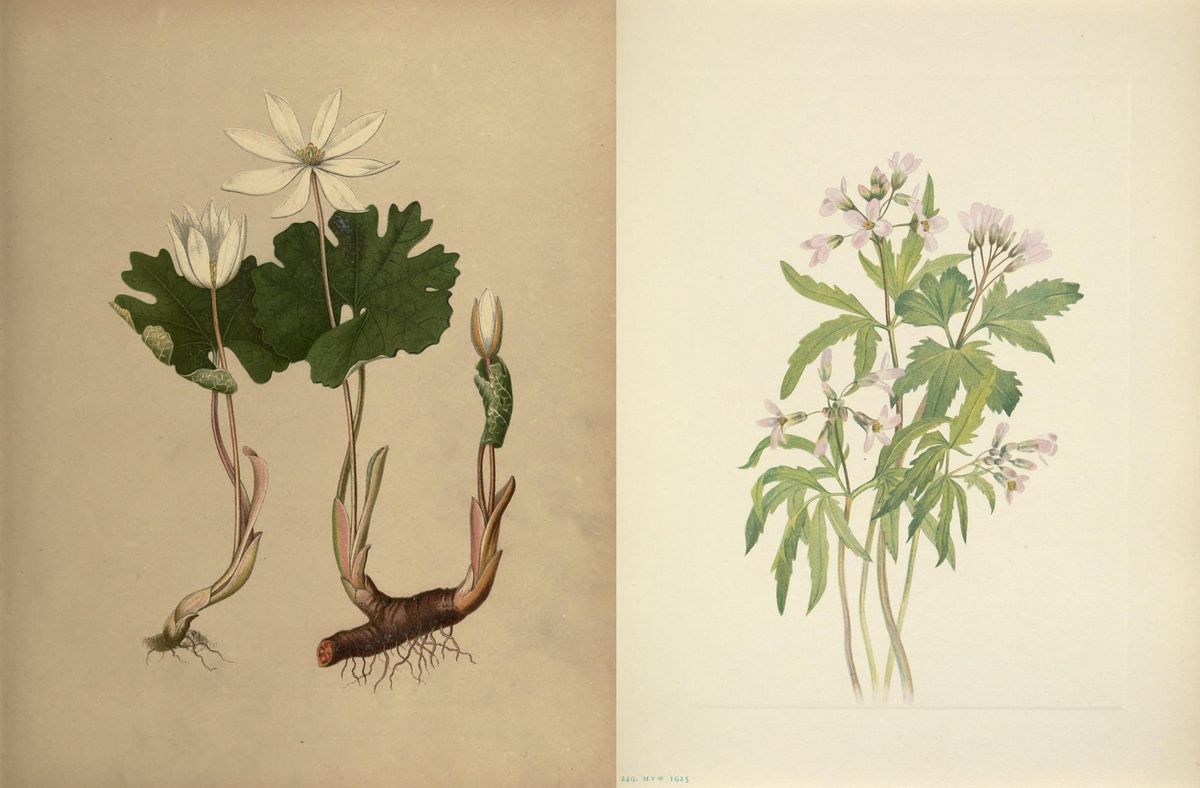
2) Toothwort, two-leaved or cutleaf (Cardamine diphylla or concatenata)
Lately, I’ve become deeply smitten with everyone else’s snowdrops, and while it might not bloom quite as early (emerging in March to May), toothwort has a similarly delicate, white, drooping blossom — along with a lot of other great traits. It’s an ephemeral, native to most of the eastern US, and also comes with dramatic, clumping foliage, whether of the two-leaved or cutleaf variety. This one is super woodland-y so of course I love it.
3) Large-flowered bellwort (Uvularia grandiflora)
This might prove controversial, but I’m personally not a daffodil girl. Don’t get me wrong: I’m extremely grateful for their cheerful yellow faces when they arrive around town, but I’ve never felt compelled to plant any — until my feed started flooding with pics of smaller, more delicate-looking, sort of shredded narcissus varieties. (Note: I do love a forced paperwhite in the dead of winter.) This large-flowered bellwort, which grows from 1-2 feet high, strikes me as a Northeast American woodland corollary to the frillier yellow daffs and narcissi, although it blooms a bit later in April/May. And it’s apparently not an ephemeral, but a lighter-green-foliage perennial option for shady woodland spots. So maybe I’ll need to wait on this one until I have more summer shade to offer.
4) Bloodroot (Sanguinaria canadensis)
A spring ephemeral that blooms from March to May, this one sounds like a real character. Each bloom arrives as a bud dramatically wrapped in a large, deep-cut leaf, which gradually unfurls to reveal the striking white, upright flower at its center. But it’s apparently also moisture-needy and harmful to human skin, requiring careful handling, so ... hm.
.
Vintage botanical illustrations (now public domain) via the Biodiversity Heritage Library.