On My List: Weeds and wildflowers
aka my “forbs Top 10 list.”

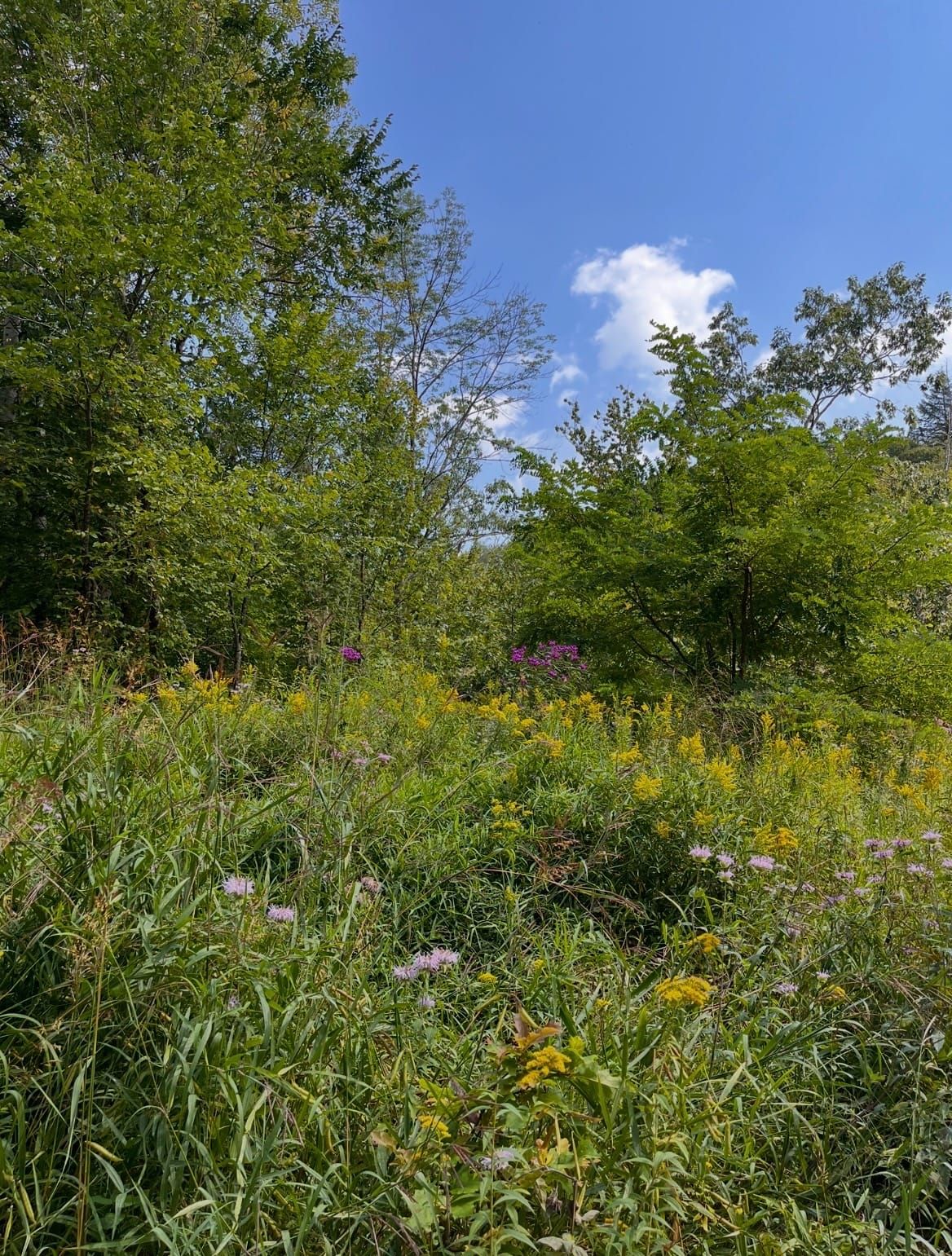
You should know that I like a wild and “weedy” garden — bordering on abandoned looking. I can enjoy an orderly or even formal garden, but what I want for myself is a looser, messier, engulfing sort of greenness. It was on the river-adjacent meadow trails of Nashville, in the years I wasn’t gardening, where I fell truly, deeply in love with a category of plants I’ve long referred to somewhat redundantly as “weeds and wildflowers” without knowing the proper term for them is forbs. A name that sounds much too stuffy for these typically rangy, bee-buzzing, wind-whirling gems!
So you can imagine that once I started researching the weeds and wildflowers native to my area, in pursuit of those I’ll invite into my garden, I was thrilled to find a wealth of options. So much so that, at least where flowering plants are concerned, I can’t see any need to look beyond the natives — there are already more beauties available to me than I could ever hope to include. Which means I’ve crossed off a lot of Northeastern garden classics (wild geranium, floss flower, nepeta, Japanese anemone ...) in favor of things I both had and hadn’t heard of before, some of them lesser-known relatives of those very classics.
(ICYMI: I’m new to Northeast gardening.)
As previously noted, I’ve already planted a lot of my fave, New York Ironweed (Vernonia noveboracensis and a couple of other variants), plus a few Upland boneset (Eupatorium sessilifolium), some coneflower (Echinacea purpurea), a first Smooth aster (Symphyotrichum laeve) from the Keystone plants list, and I have a couple of Joe-Pye Weed plants that need to be moved to a sunnier spot. Beyond those, the list of contenders in this category is long. So what I’m sharing here today are my Top 10 Native Weeds to seek out, some of which also happen to be additional keystone plants—
1) American burnet (Sanguisorba canadensis) aka Canadian burnet
I’m obsessed with this seemingly little-known native plant, which I actually bought in a gallon container at my farmers’ market last summer and kept in a pot. I hope it will have survived the winter, but will be adding to it and putting them in the ground this year regardless. It reminds me of the New Zealand plants I loved while gardening in CA years ago, with dramatic, deeply cut, mounding foliage — great contrast to most of the rest of this list — and white, 6' tall, bottle-brush blooms. It does want dampness, and it is a total bee magnet, so I have to figure out where I can situate it such that its needs will be met and its fervent pollinators won’t be bothered by passers-by. Or vice versa.
2) Blue vervain (Verbena hastata)
My burnet at first bloomed purple, which was not what I’d been told to expect, and it took me a minute to realize I had two kinds of foliage and an unidentified stowaway in the nursery post. I thought perhaps the volunteer was a hyssop but then I ran into verbena hastata (also known as swamp verbena) in my research and am certain that’s what it is. It’s beautiful with the burnet — and has the same desires — so I’ll plan to plant the two together.
3) Culver’s root (Veronicastrum virginicum)
Veronicastrum keeps turning up in the context of winter-interest plant recommendations, where I fell in love with it for it’s statuesque nature in any season, and I was thrilled to find that it’s native here — and readily available. I’m picturing it in a spot that might be too dry, but there’s one way to find out! And I’ll try it in multiple places for good measure.
4) Tall thimbleweed (Anemone virginiana)
I have always wanted to grow Japanese anemone, which I find impossibly lovely. I tried it in both of my California gardens, where I couldn’t make it happy. I know it will grow here, but I’m excited to have learned about this pretty NY native anemone, commonly known as thimbleweed, that I even have a good source for. It will definitely be a key player in my future courtyard garden.
5) Tall meadow rue (Thalictrum pubescens)
I’m similarly drawn to this tall, fluffy white rue, which I would love to plant on both sides of the courtyard. It seems not to care about sun or shade and will reportedly tolerate dry shade, but how much dry might it tolerate on the sunnier side? Again, one way to find out.
6) Wood anemone (Anemone quinquefolia) OR Rue anemone (Thalictrum thalictroides)
These nearly identical plants (one white, one pinkish) are low-growing anemones and true spring ephemerals, and I am so intrigued by them. On the hunt.
7) Broad-leaved / Clustered mountain mint (Pycnanthemum muticum)
This is another one I am fully obsessed with — those whitish-green blooms? I’m a total sucker for that. It’s in the mint family and said to be less aggressive than other mints, but I would never not be extremely cautious with a mint. So I want it badly but will want to keep it contained.
8) Wreath / Blue-stemmed goldenrod (Solidago caesia)
I mentioned before that the exception to my general dislike of yellow in my garden would be goldenrod paired with asters and bonesets, as seen all over the wilds of the Hudson Valley and Catskills in the fall. Wreath goldenrod is a keystone plant in my region, among other fine traits, so it’s the one that’s made my list. Although I also have a low, white-blooming (also keystone) goldenrod under consideration, called Silverrod or White goldenrod (Solidago bicolor).
9) Heath Aster (Symphyotrichum ericoides)
Another keystone aster, heath aster is a low, scrubby, white-bloomer that’s a good rock garden plant and should be great on the sunny side of the courtyard, among other spots.
10) Spotted beebalm (Monarda punctata) AND/OR Wild bergamot (Monarda fistulosa)
The low-growing punctata has a lot in common with the heath aster, while the 4' tall fistulosa is a showier option that also has herbal/medicinal value — and one of my favorite scents. Its aggressiveness is the only potential downside.
Ok that’s more than 10, and still leaves lots more candidates to consider further down the road!