Playing Favorites: The serviceberry
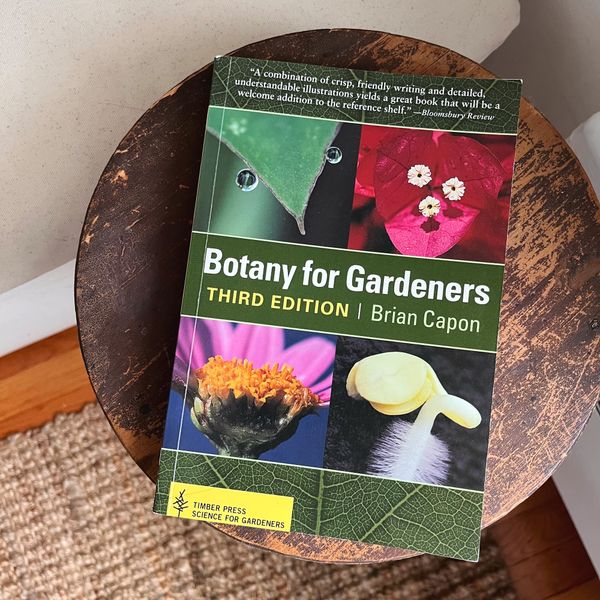
As in the plant, amelanchier, not the book. (Although I love that too.)

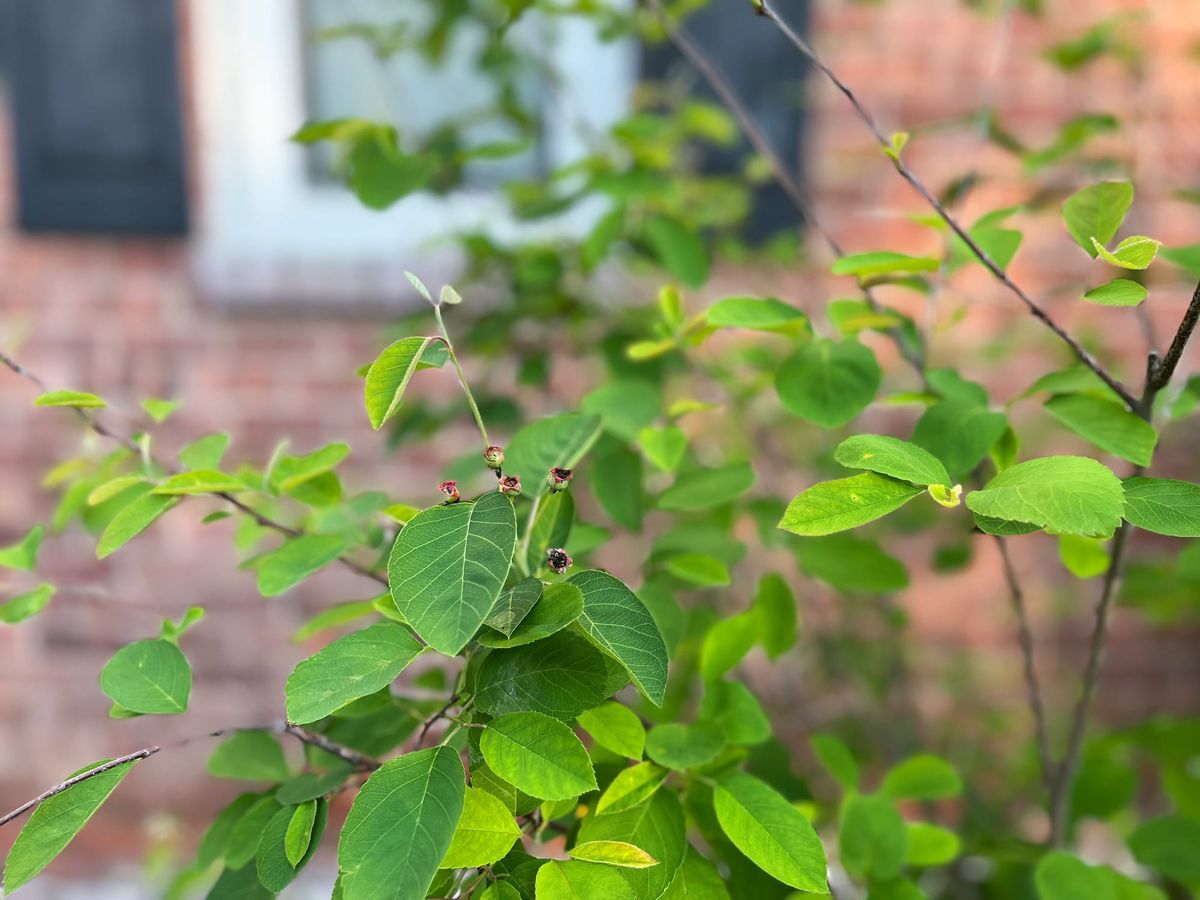
It seems premature to be fawning over this plant before she even has any plant friends — just sunk here by herself in the asphalt-rubble and under-gravel at the moment, as seen below — but that’s the thing: even in this state, I can’t take my eyes off her. My husband is likewise smitten. She’s our second serviceberry and I call her June, as the Amelanchier’s many nicknames include both serviceberry and juneberry. And our June is, as the husband put it the other day, fanTAStic.
I planted the first one late last year, back in the back corner, swayed by both Robin Wall Kimmerer’s book and the constant raves I see from all quarters about this plant. To my knowledge, I’ve never seen one in person, and that first one went in at the end of the season — a smaller plant and somewhat meek in its nursery pot in late August or September, when I acquired it. But then in October, it turned the most beautiful shade of soft orange, and I started to understand.
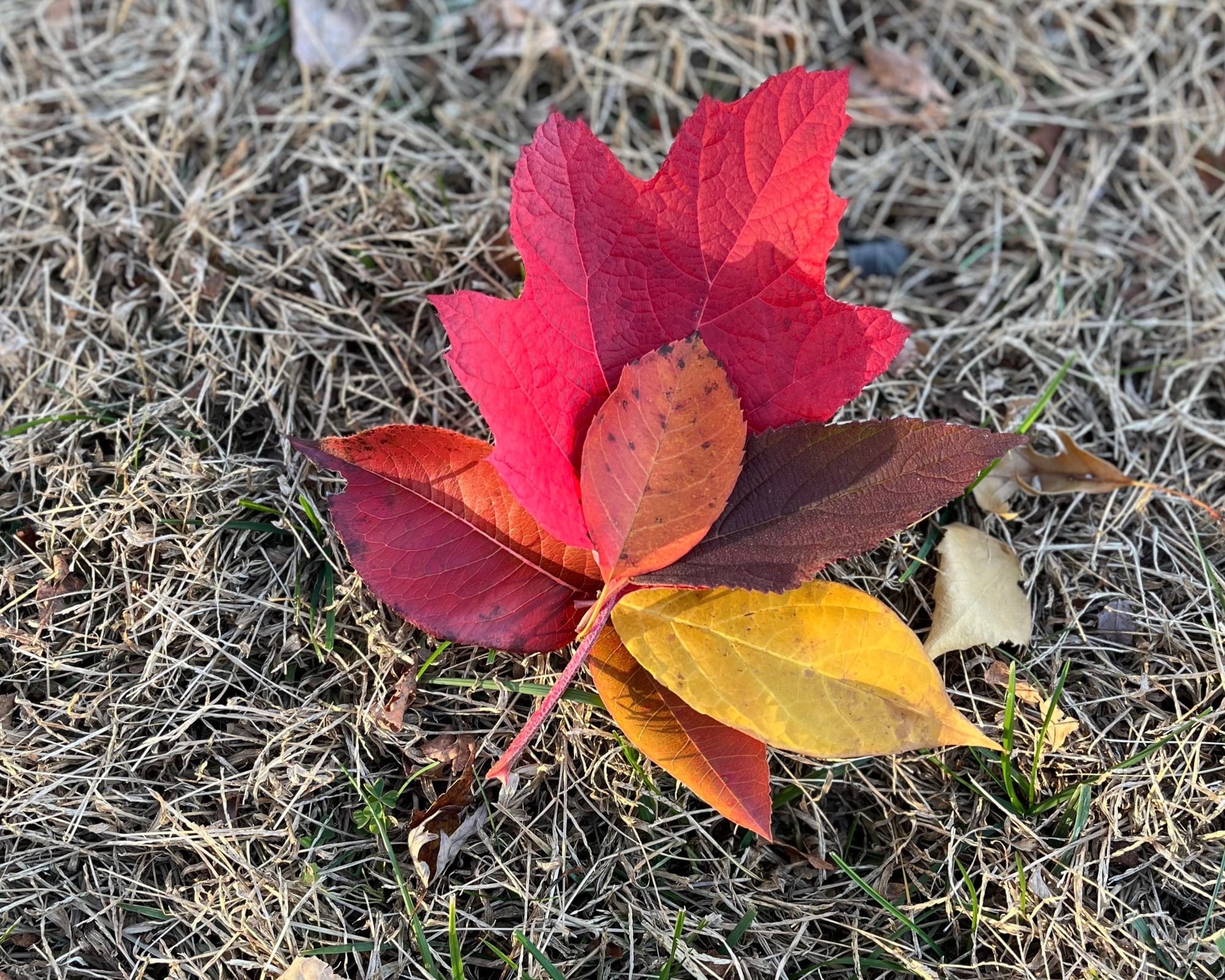
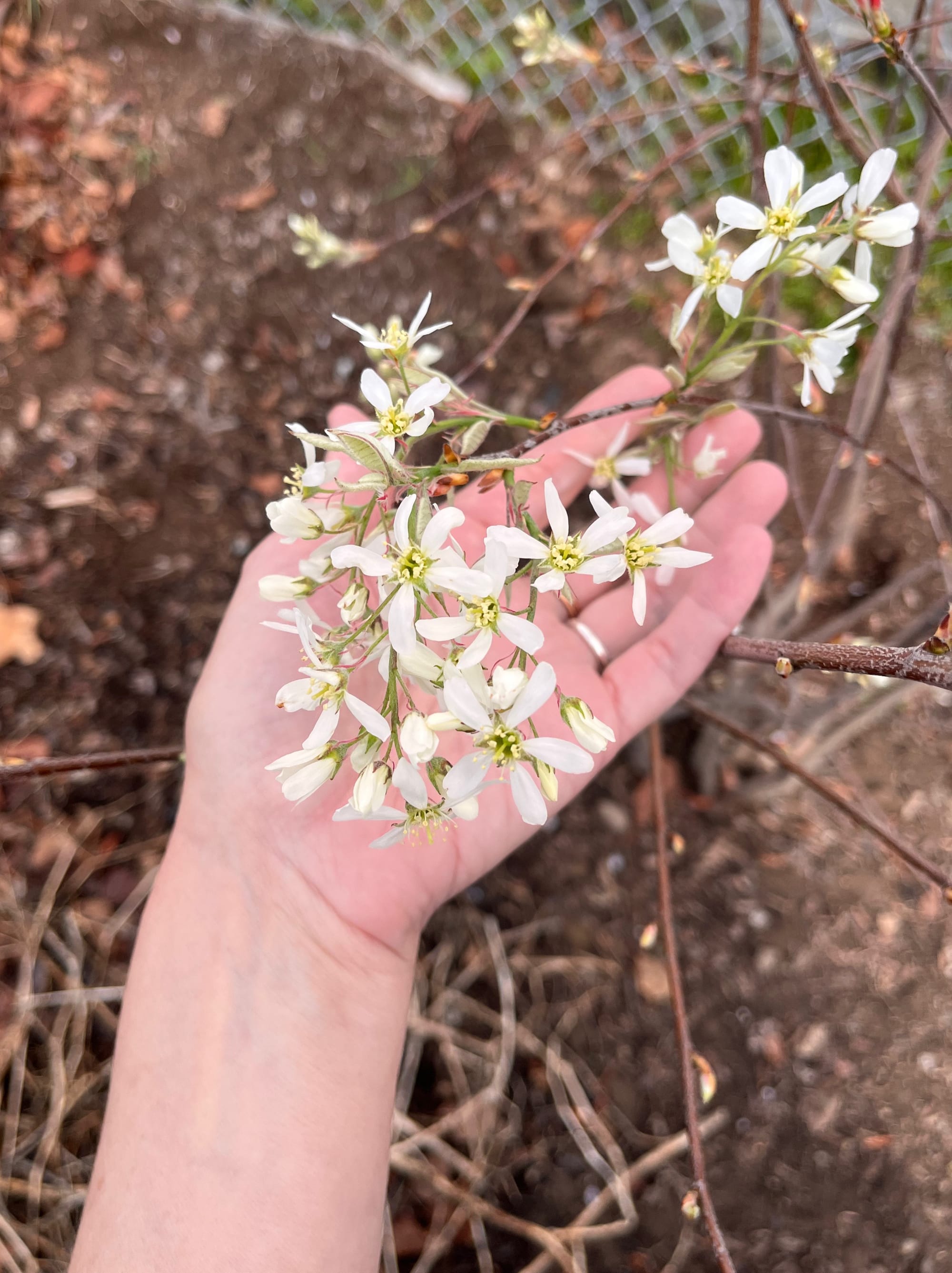
Serviceberry No.1’s beautiful orange October leaf in the middle of the bouquet, followed by delicate blossoms in April.
When the first nursery of the season opened up in early April, they had several rows of 5- or 10-gallon plants (about the size of my first one) that were already in bloom, presumably from having been in a controlled environment before being set out on the nursery lot. When I went back a few days later, they were completely gone. But there was a new group of larger, field-dug ones, most of which also already had sold tags dangling from them. This one was in the middle of the group, just bare branches and its burlap-clad clump, but I liked its shape for this spot in the forthcoming courtyard, against the back wall of the house, and I had a store credit that would cover it. So I went all in.
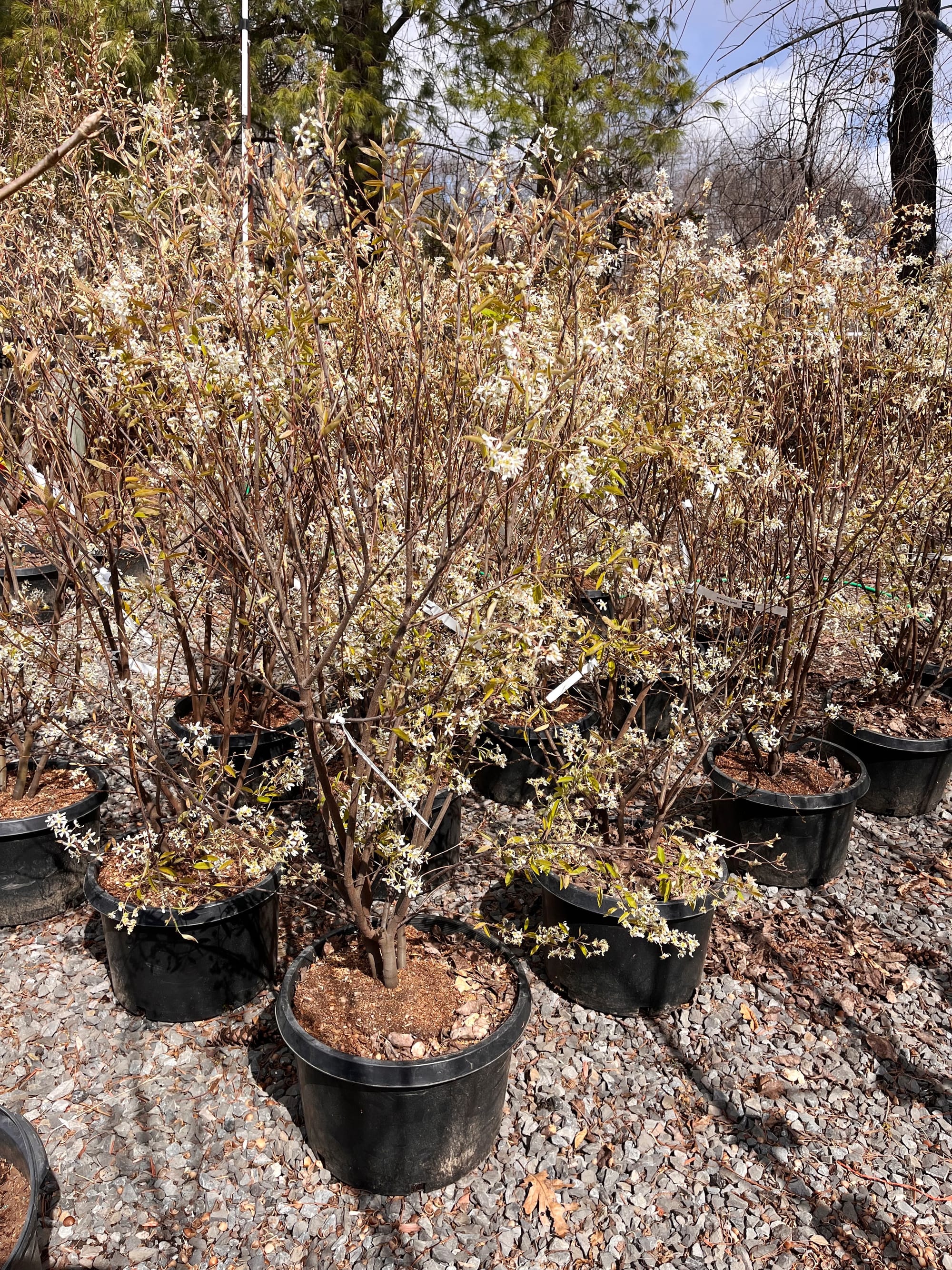
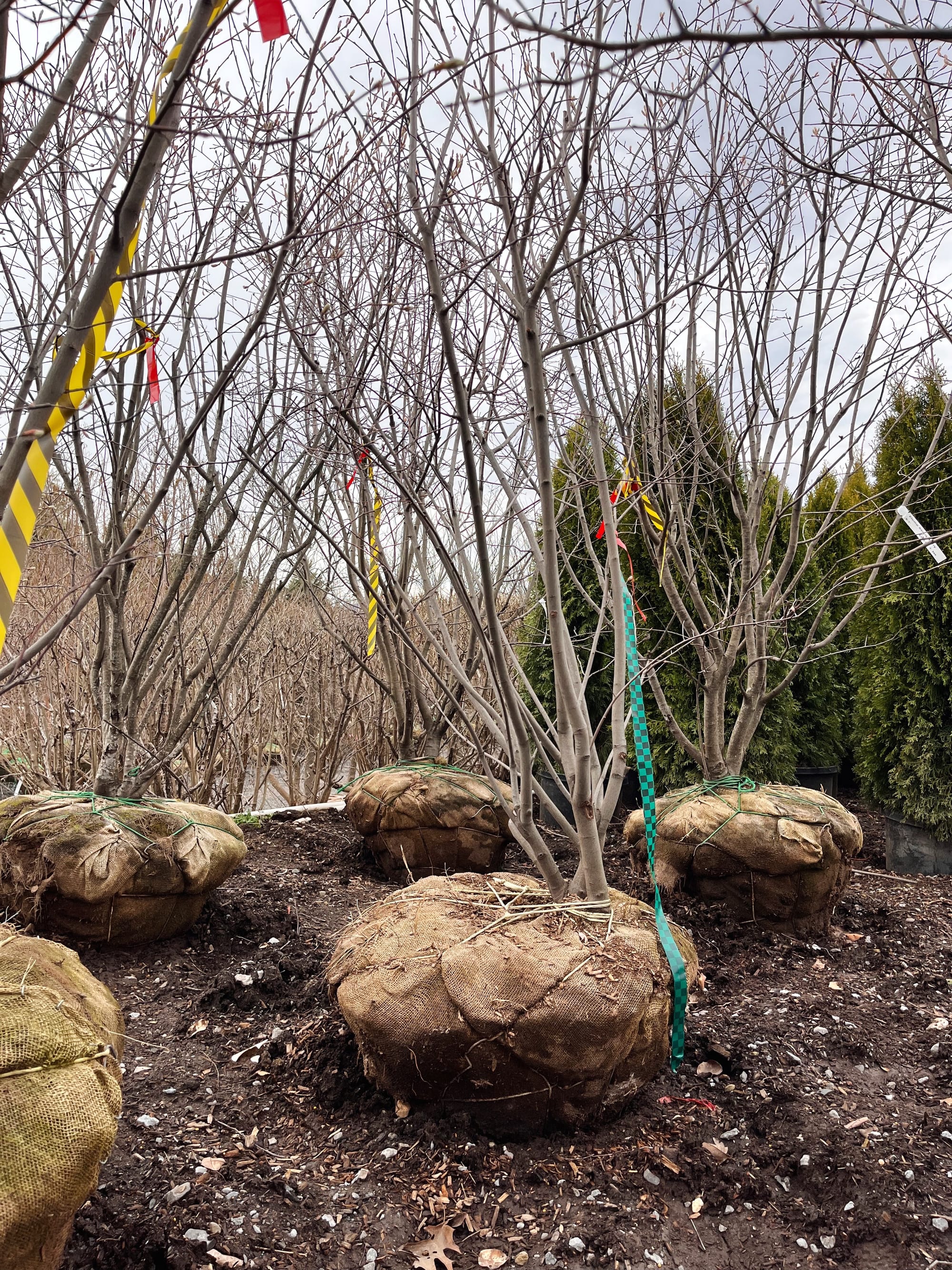
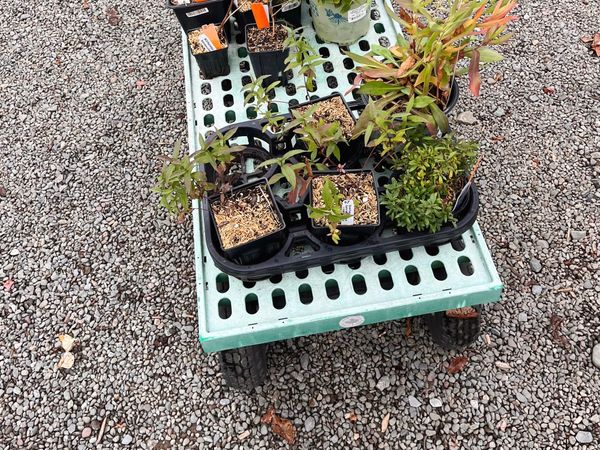
In pots and clumps, they were being immediately snatched up. That’s my June with the green streamer.
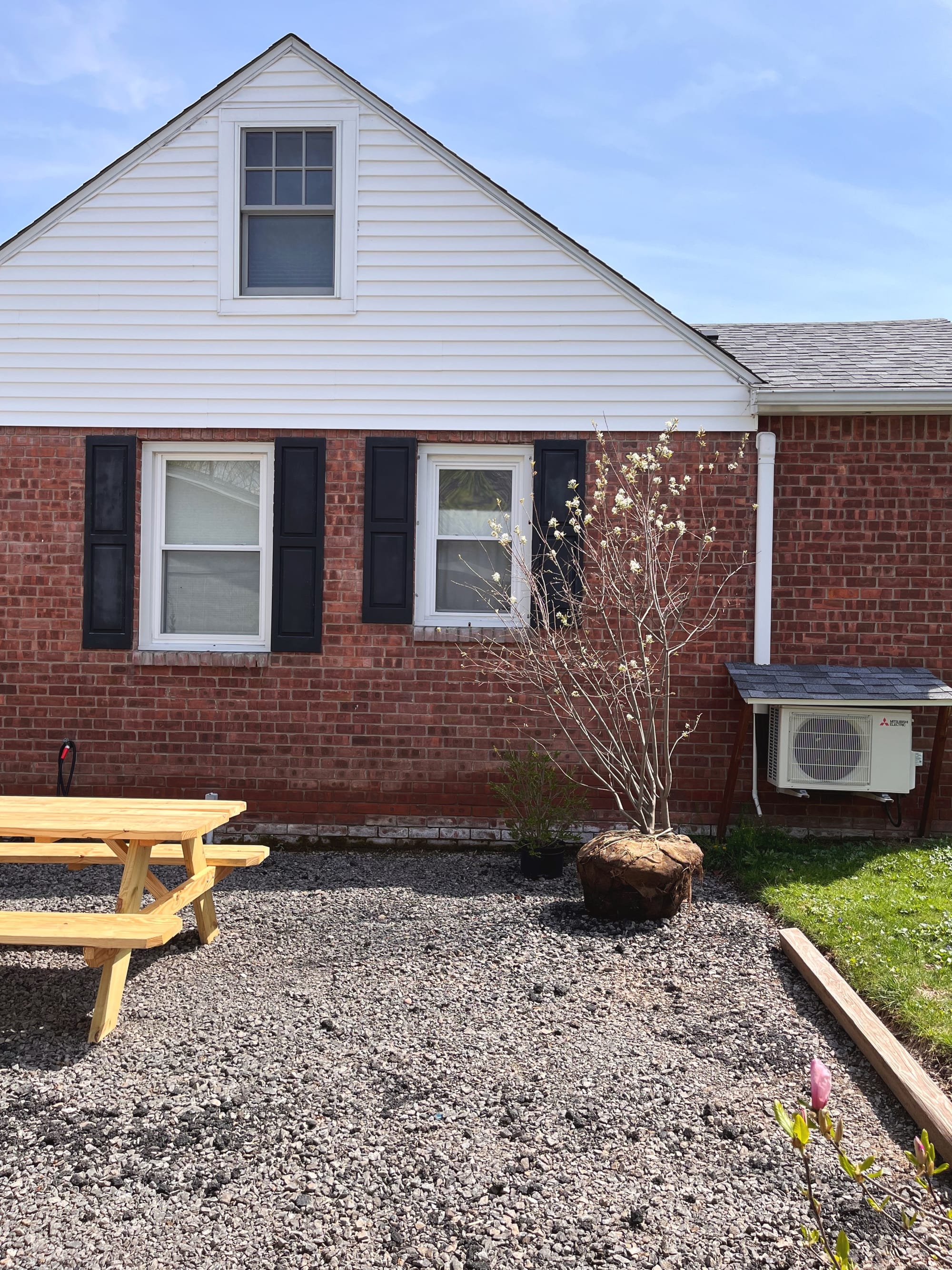
Long story, but it got delivered and sat on its clump for a couple of weeks before it became clear I needed them to come back and plant it for me (a costly mistake), which they did. It began to bloom right as our March heat wave hit, cutting that short, then it started tentatively putting out a few delicate leaves, and I began to wonder again what it is people rave so much about. Would I love this plant as much as I hoped? Then, despite being dug up from its spot in the field, transported to the nursery, brought here, left to sit for weeks through whiplash weather, and finally planted, it has not missed a beat — and is already growing. Which you just don’t expect from a large, field-dug plant like this.
And not just growing, but growing fast: She’s already slightly taller than she was a month ago sitting on her ~16" clump!
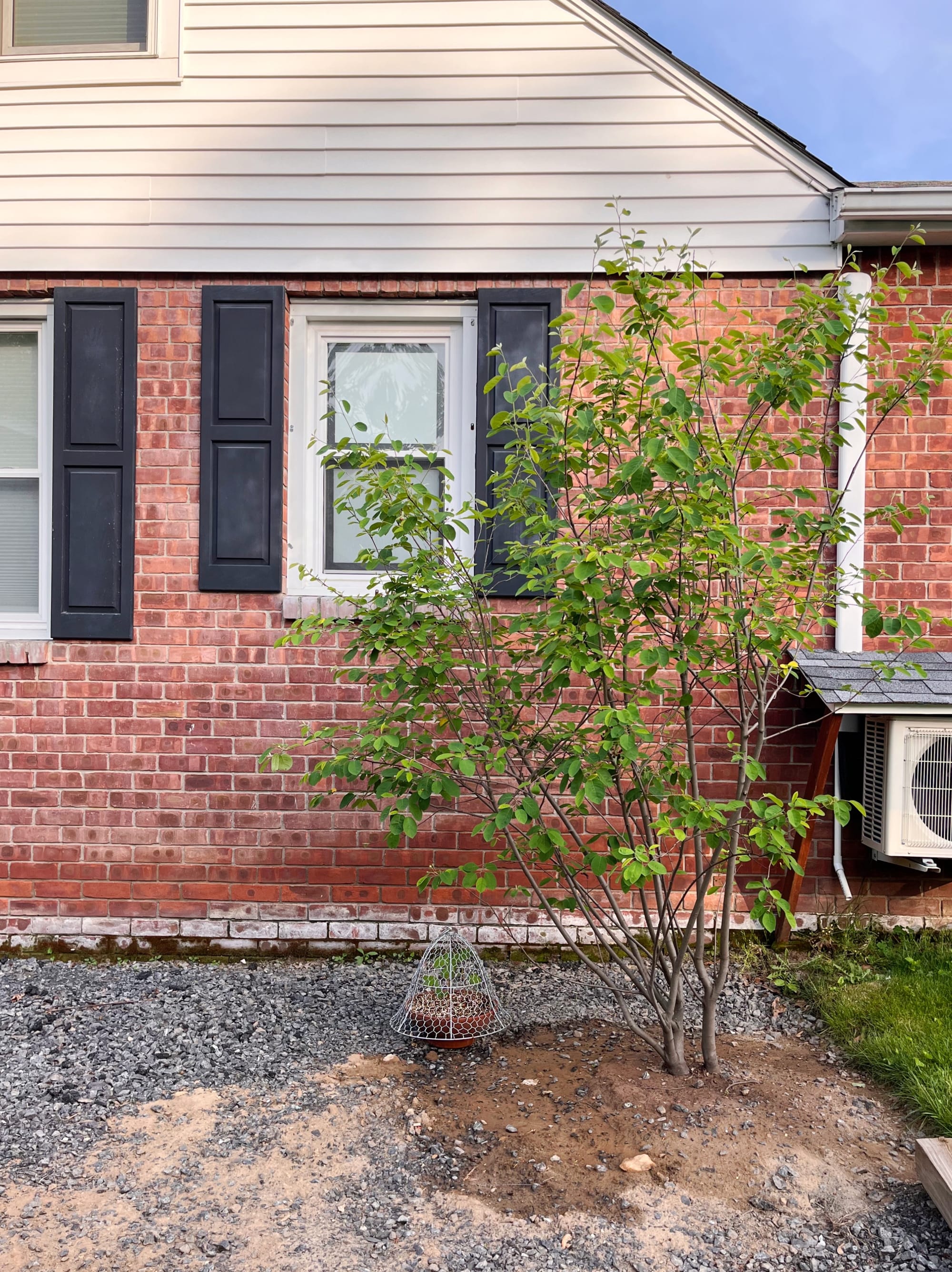
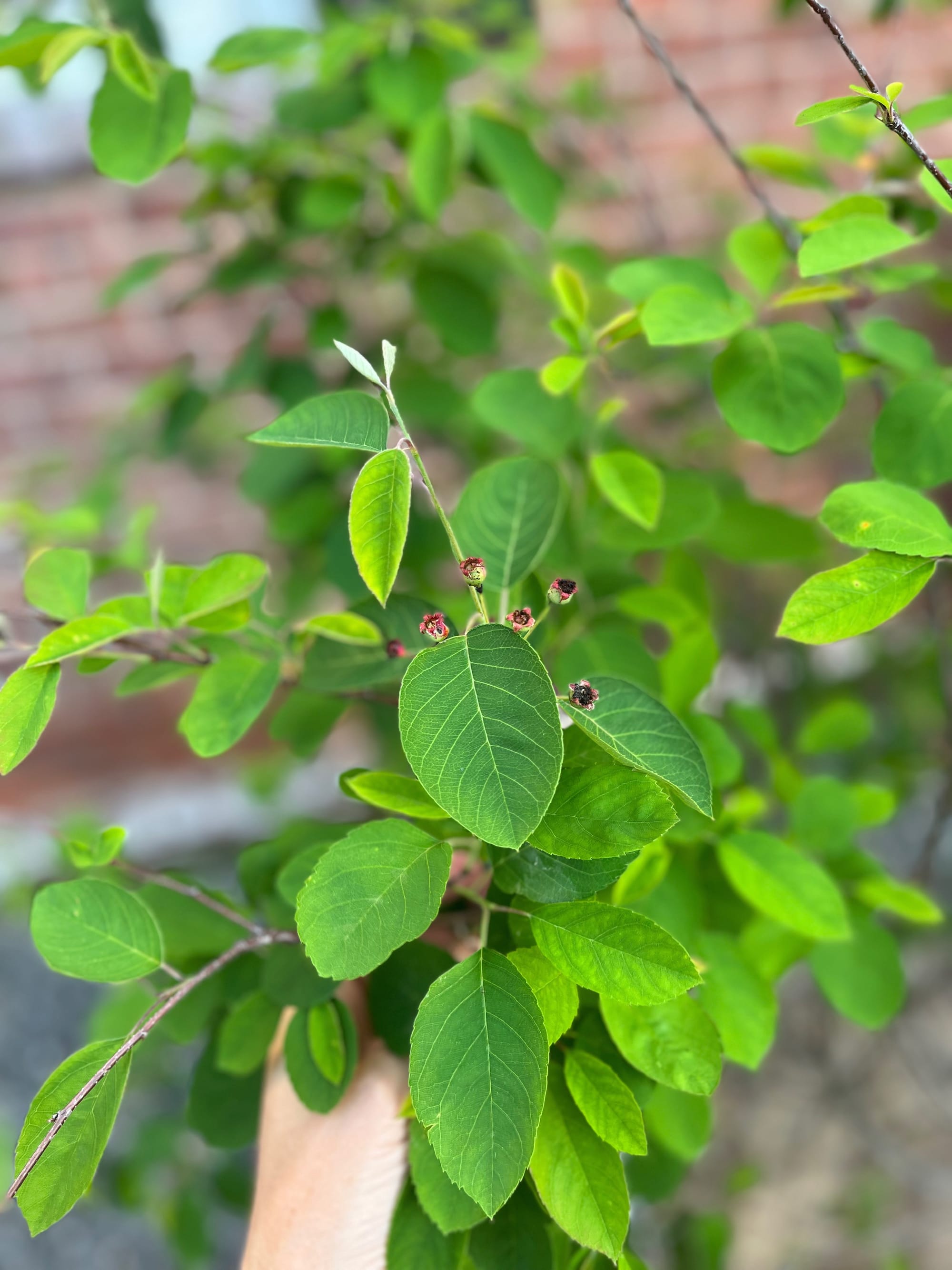
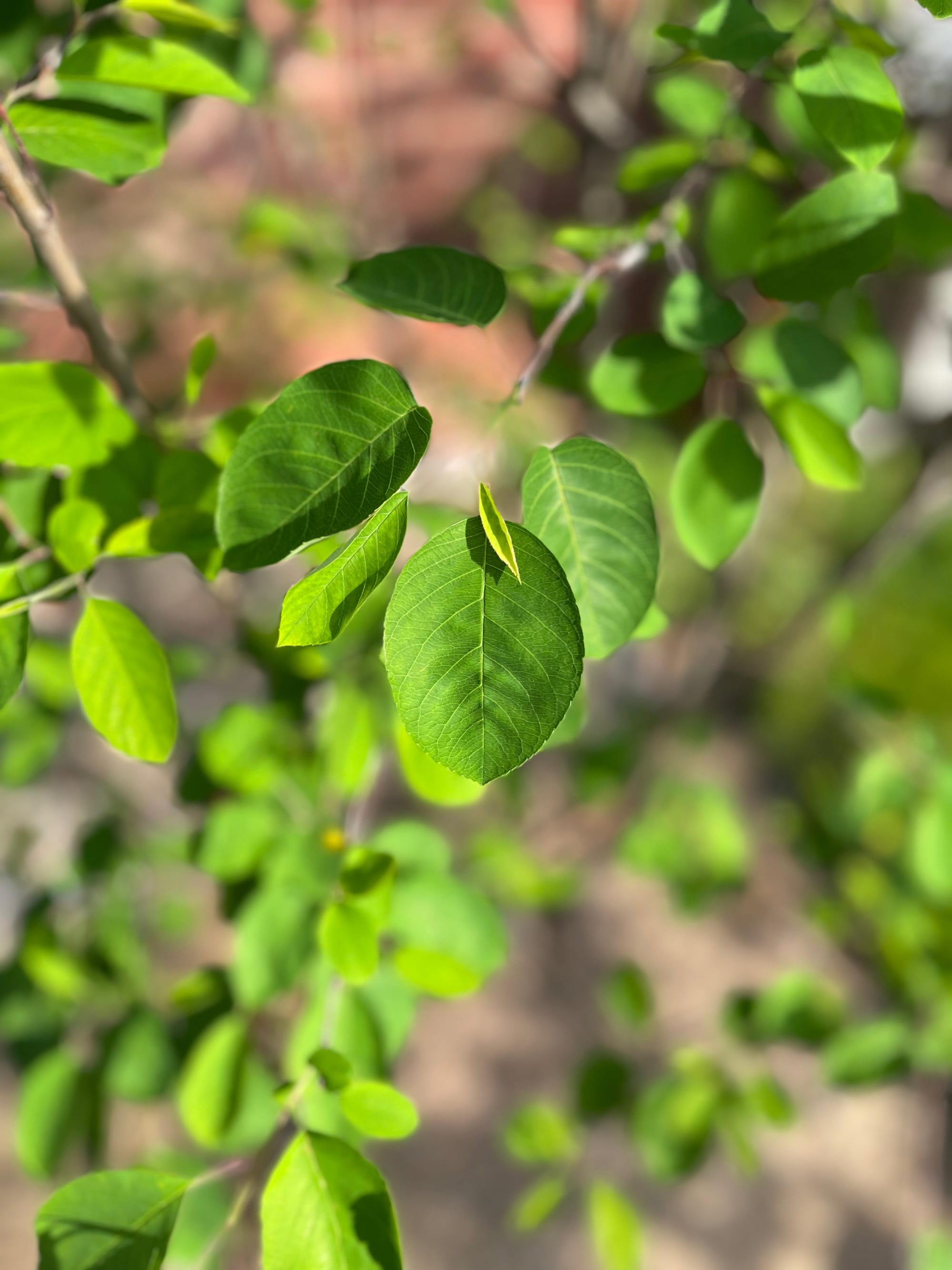
In other words she appears totally unfazed and, in fact, thrilled to be here. And we’re thrilled to have her.
I do wonder if I’ll ever be able to take a still photo that does her justice — I’m making that a personal goal — but I will add pics to this post as she grows and progresses through the seasons. There’s just something almost indescribable about how delicate but complex this plant is. The subtle variation in the color of the leaves, the particular way they rustle in the breeze. I don’t know, it’s mesmerizing. She’s now starting to lay the groundwork for next month’s berries (thus the moniker: juneberry), which I can’t wait to see. And taste!
Once I surround her with grasses and ferns and anemones (plus some kind of partition for that a/c unit), being as she’s the view from my favorite seat, I might actually never stop staring.
PLANT DETAILS:
• Serviceberry aka juneberry, shadbush, shadblow (Amelanchier — I believe it’s x grandiflora, ‘Autumn Brilliance’, a hybrid of two US native Amelanchiers)
• Member of the rose family, Rosaceae
• Typically a multi-stem large shrub or small tree, can grow to ~20'
• Blooms in delicate off-white clusters in April, leading to edible dark purple berries in June, loved by both humans and wildlife
• Spectacular soft orange fall color, bare branches in winter