Playing Favorites: Upland (vs common) boneset
Boneset is great. Upland boneset? Dreamy!

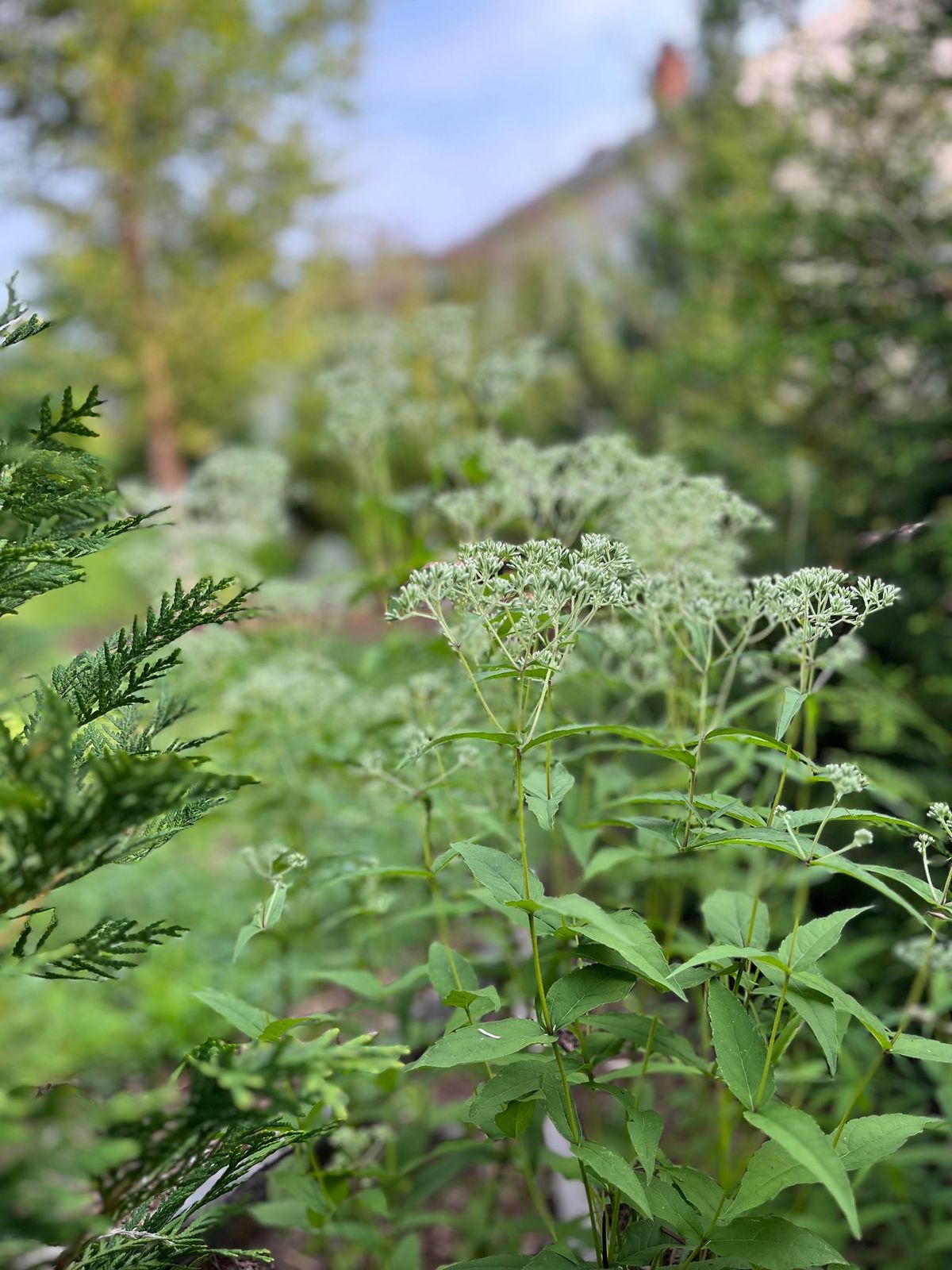
I mentioned the other day that a plant I picked up at a season-end ugly plants sale last year (three sad little pints actually) has grown into one of my very favorite plants this year: upland boneset. I’ve been posting pics of it repeatedly in my IG stories and singing its praises to gardening friends, and keep needing to clarify that the object of my adoration is not common boneset (Eupatorium perfoliatum) but upland boneset (Eupatorium sessilifolium). So I’m here to not only wax poetic about the latter but to show you the distinctions between the two — how to tell them apart — and recommend what I think are some ideal companion plants.
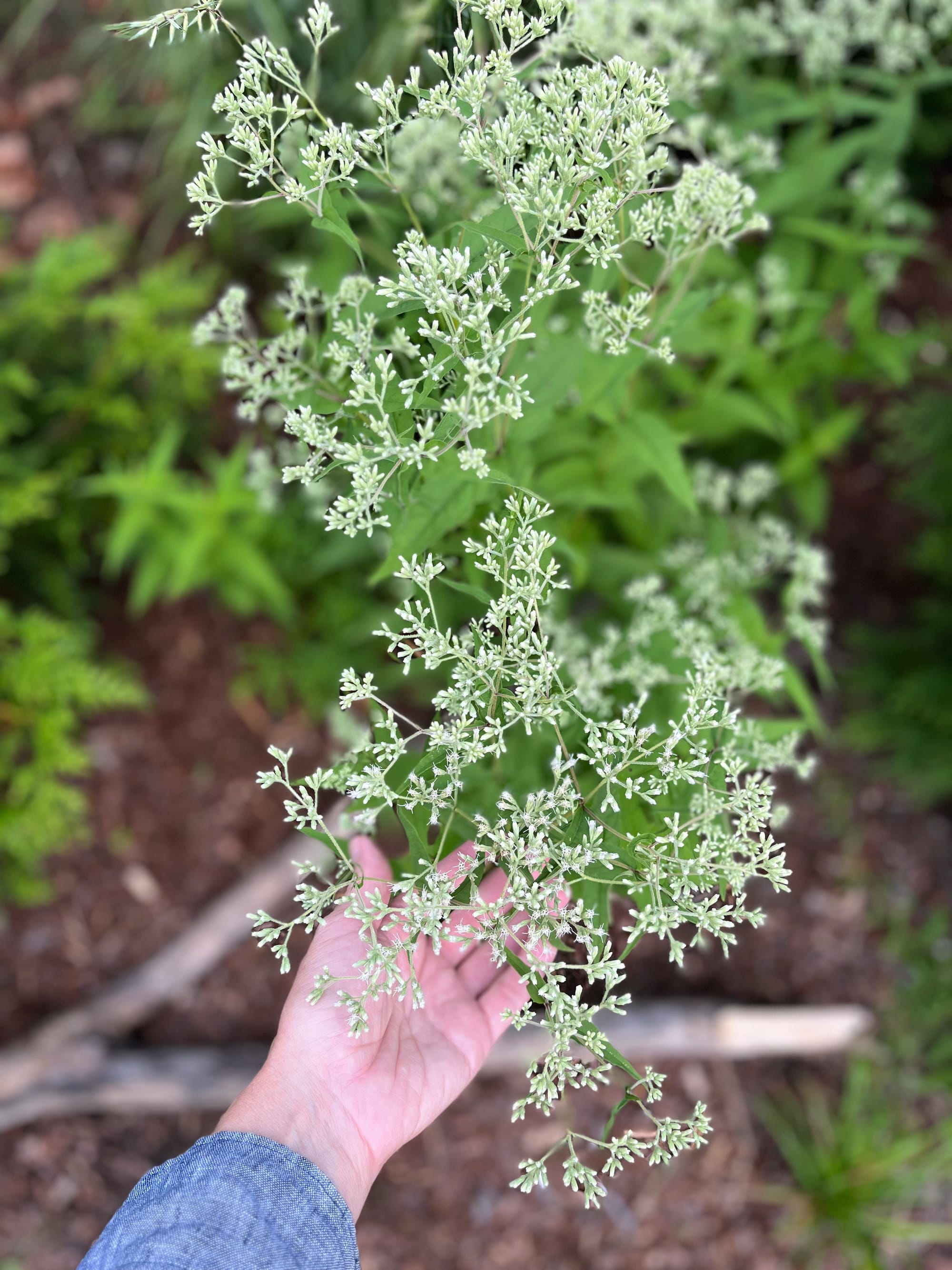
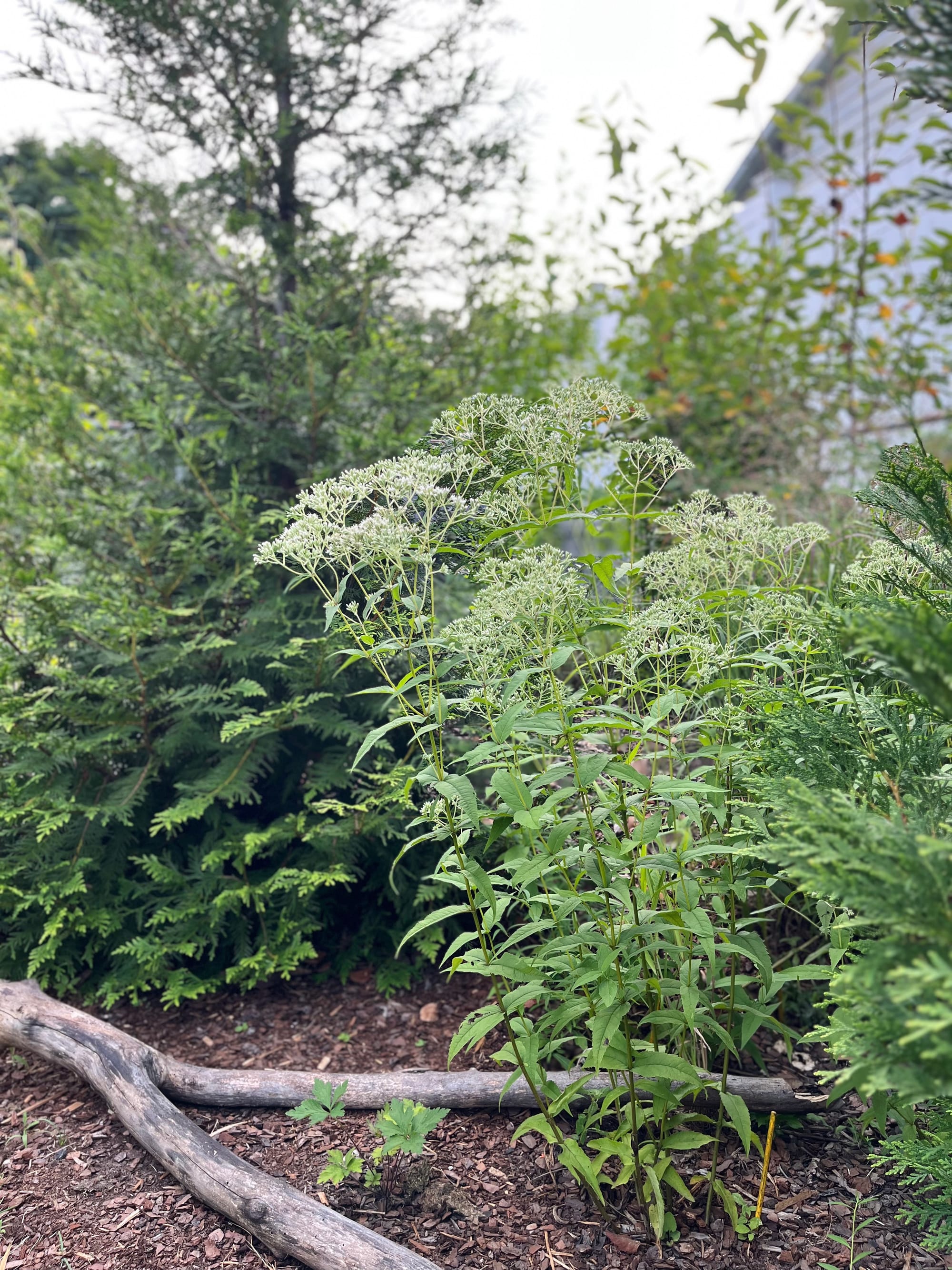
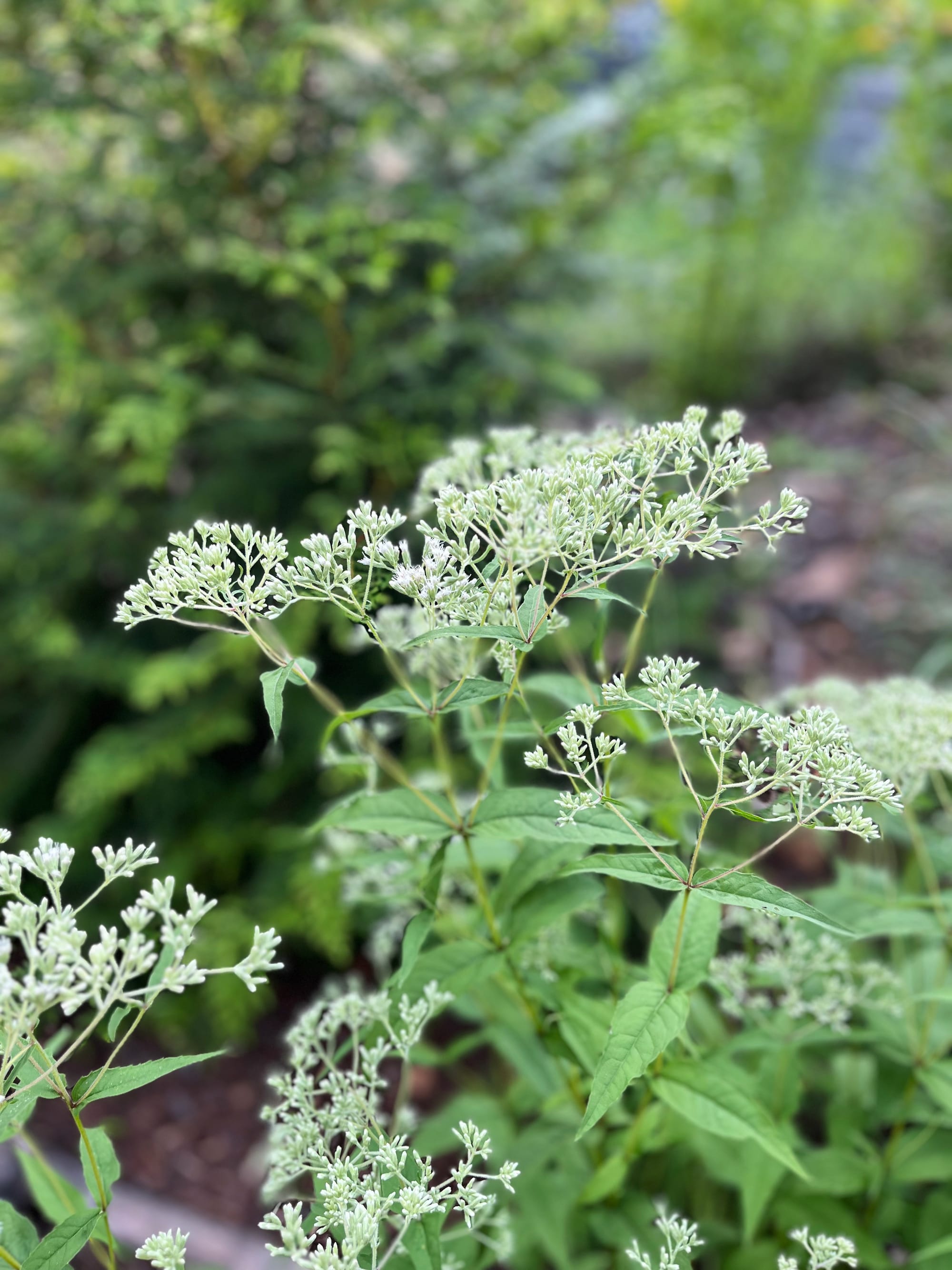
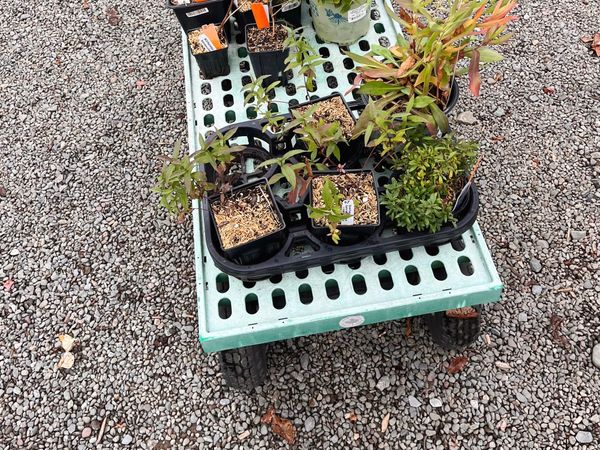
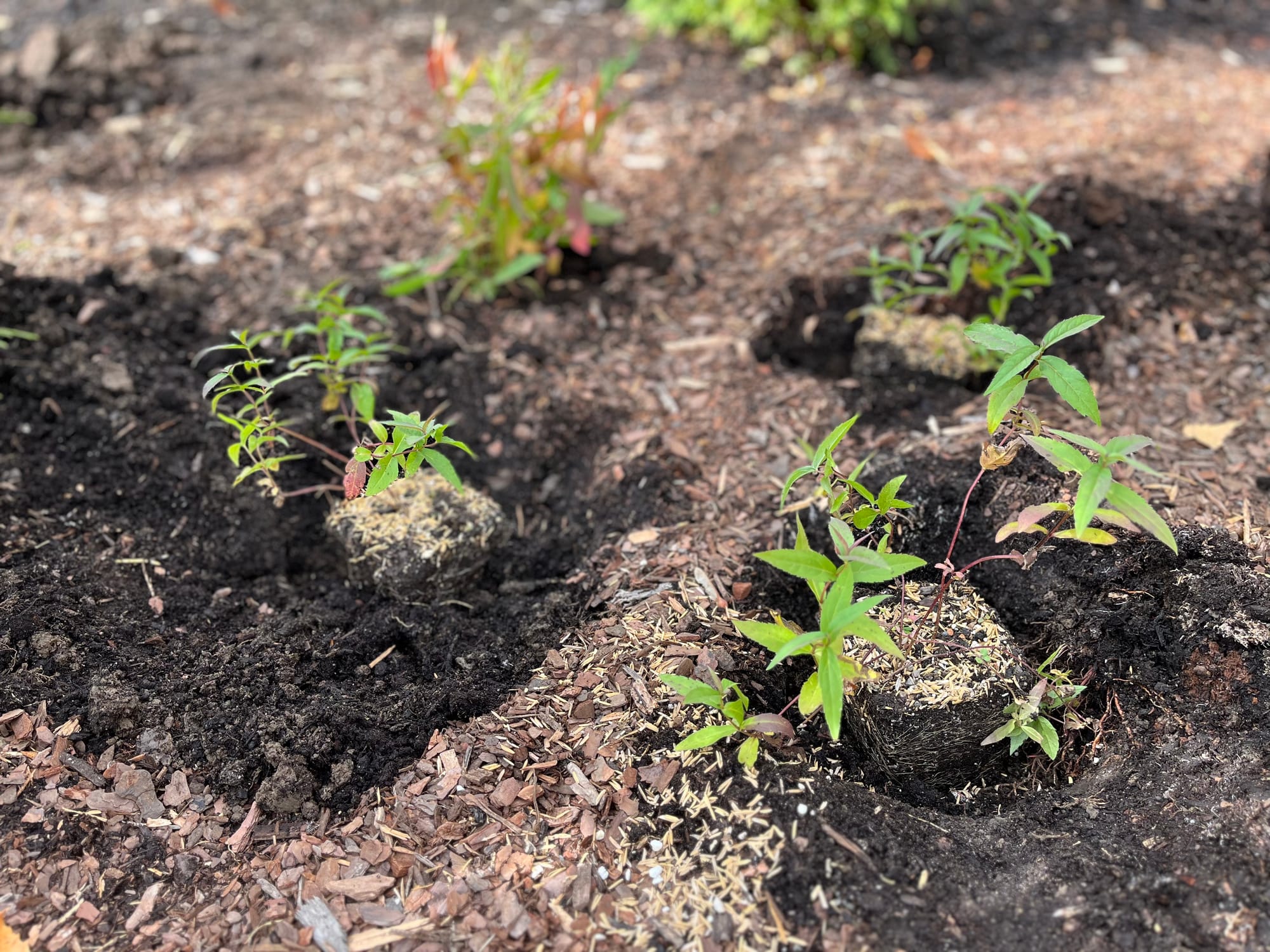
This beautiful 4' clump of upland boneset began last fall as a scraggly little sale-season trio:
To be clear: Both are great plants, I have both in my garden. And this is a classic case where using and understanding the Latin names is helpful and clarifying, so bear with me if that makes you nervous! It might be a lightbulb moment—
Again: [common boneset = E. perfoliatum], [upland boneset = E. sessilifolium]
First let’s talk about the more commonly known common boneset (Eupatorium perfoliatum), which you may know as just “boneset,” a wildflower that grows to 5' or 6' tall. It has crinkly, bright green, lance-shaped leaves with a bit of a sheen and serrated edges. They’re situated along the stem in opposite pairs that look like they’re conjoined where their bases meet and then punched through by the stem. Hence the name perfoliatum, for perfoliate or perforated. Common boneset blooms in tight white clusters held on comparatively short flower stems, which are quite hairy. The blooms are slightly pinkish, and also sort of hairy looking as the seeds form. (The hairy seeds are like little parachutes for wind dispersal.) It’s native to basically the entire eastern half of the US, where you’ll typically find it in sunny and moist conditions, but it is an unpicky, unfussy plant, and I’m happy to have it in my garden.
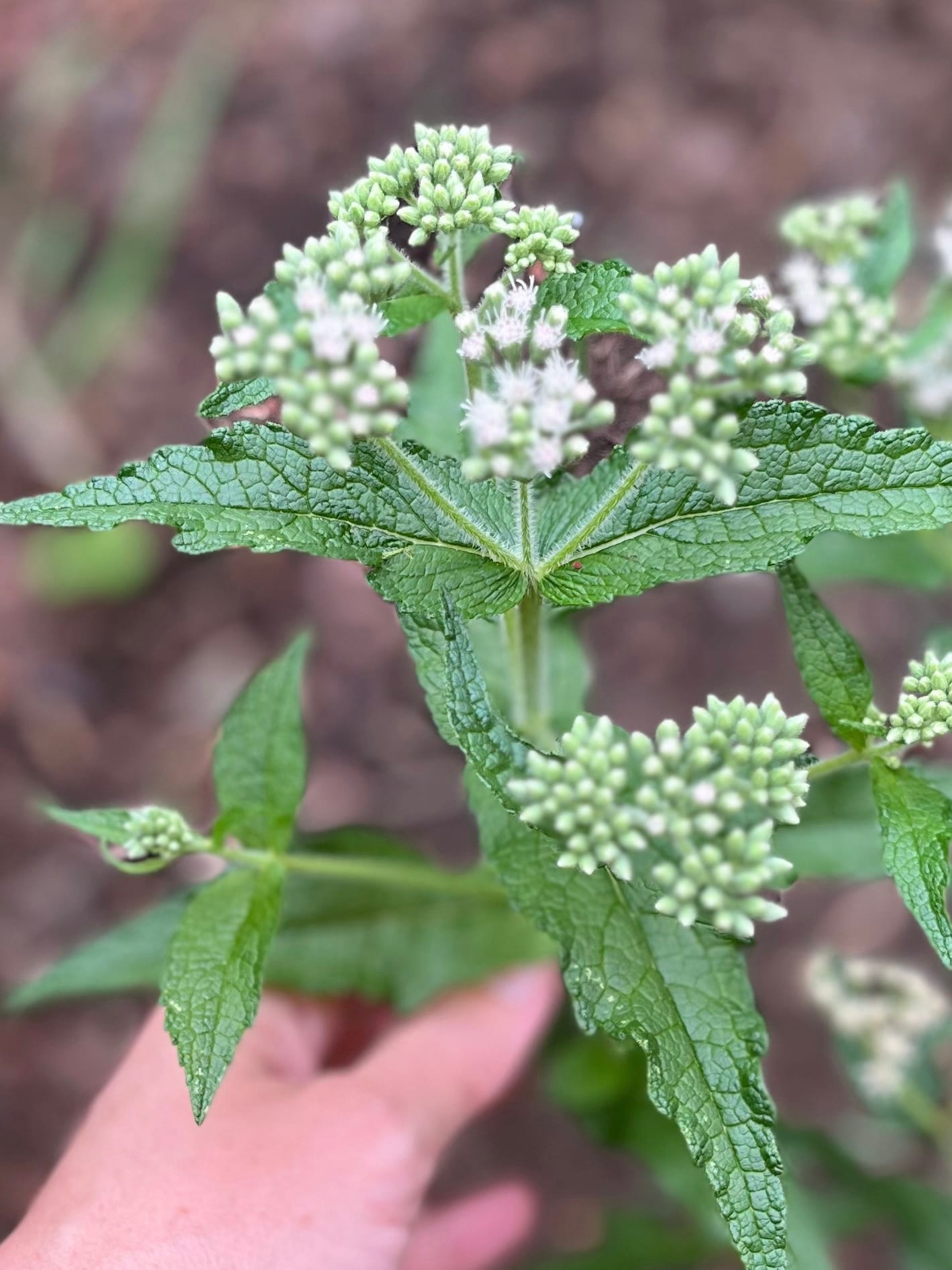
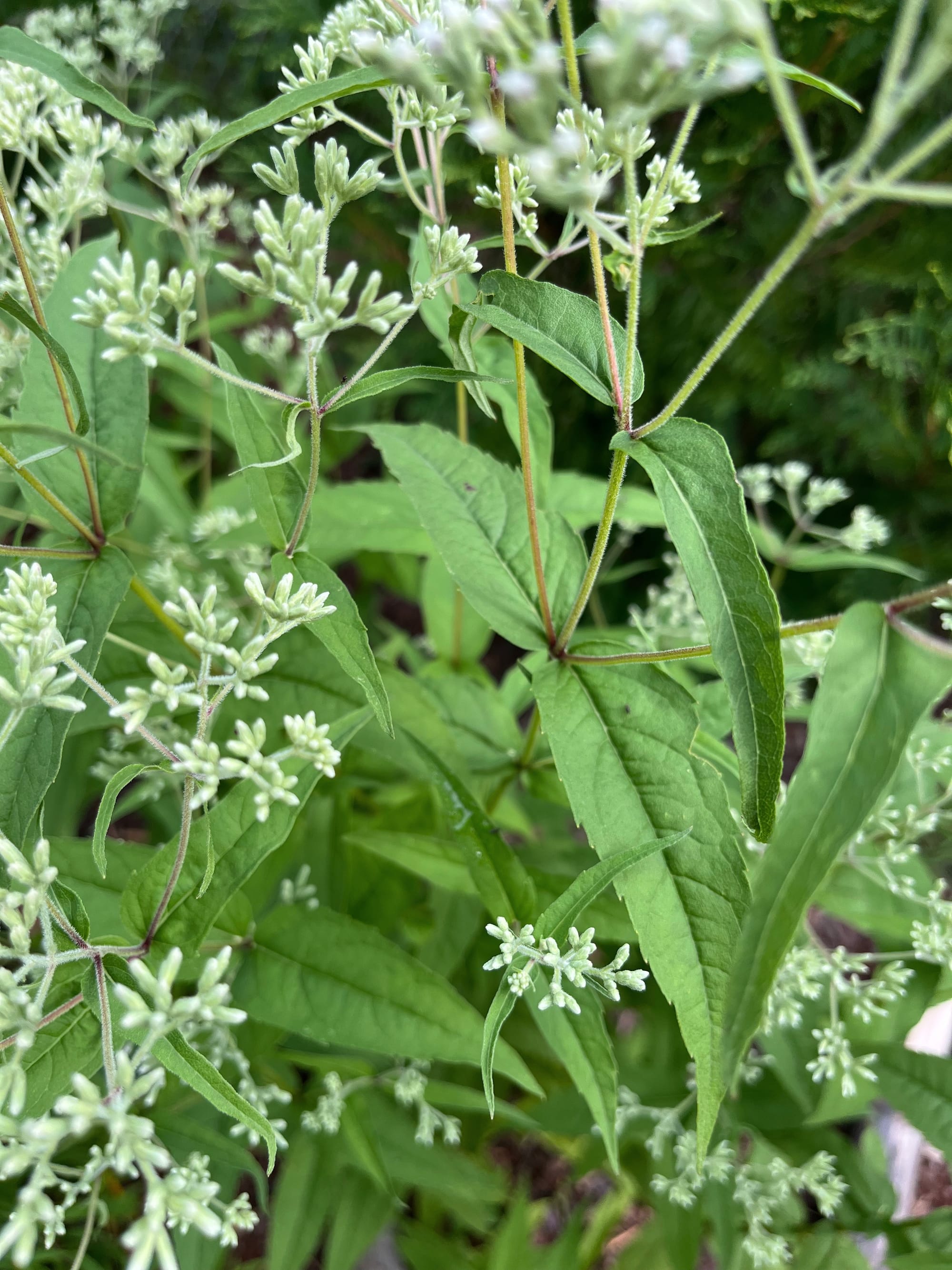
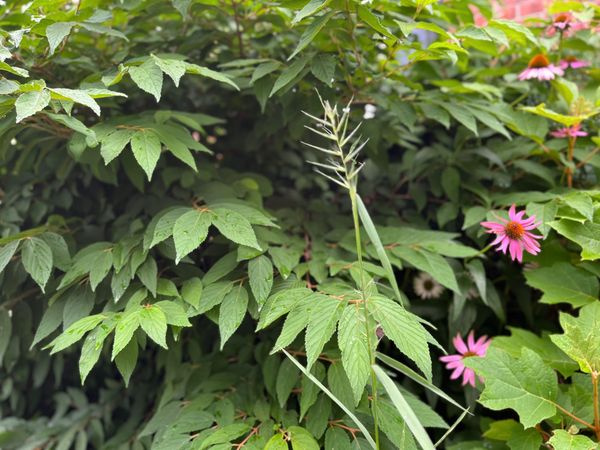
Common boneset (E. perfoliatum) followed by upland boneset (E. sessilifolium). The difference between the leaf joints is subtle, but you'll see clear differences in leaf color and crinkliness, flower clusters, and stems. Common boneset is also a bigger plant.
Then there’s my new true love, upland boneset (Eupatorium sessilifolium), which is just a more elegant plant, in my view. Sessile leaves (hence the epithet sessilifolium, sessile foliage) means they’re attached directly to the stem without a petiole (a leaf stem), but here they don’t have the appearance of going around the stem or being joined with the opposite leaf. They just meet at the stem. Upland boneset is a smaller plant, still about 3'-4' high, with less crinkly, softer grey-green foliage and more delicate, reddish purple-tinged stems. The flower stems also bear fine hairs, but in this case you really have to look for them. And it blooms in a bigger, more open and airy inflorescence, held higher on the plant. The blooms are greenish white and display the same “hairy” or fringe-looking seed behavior.
It’s so pretty.
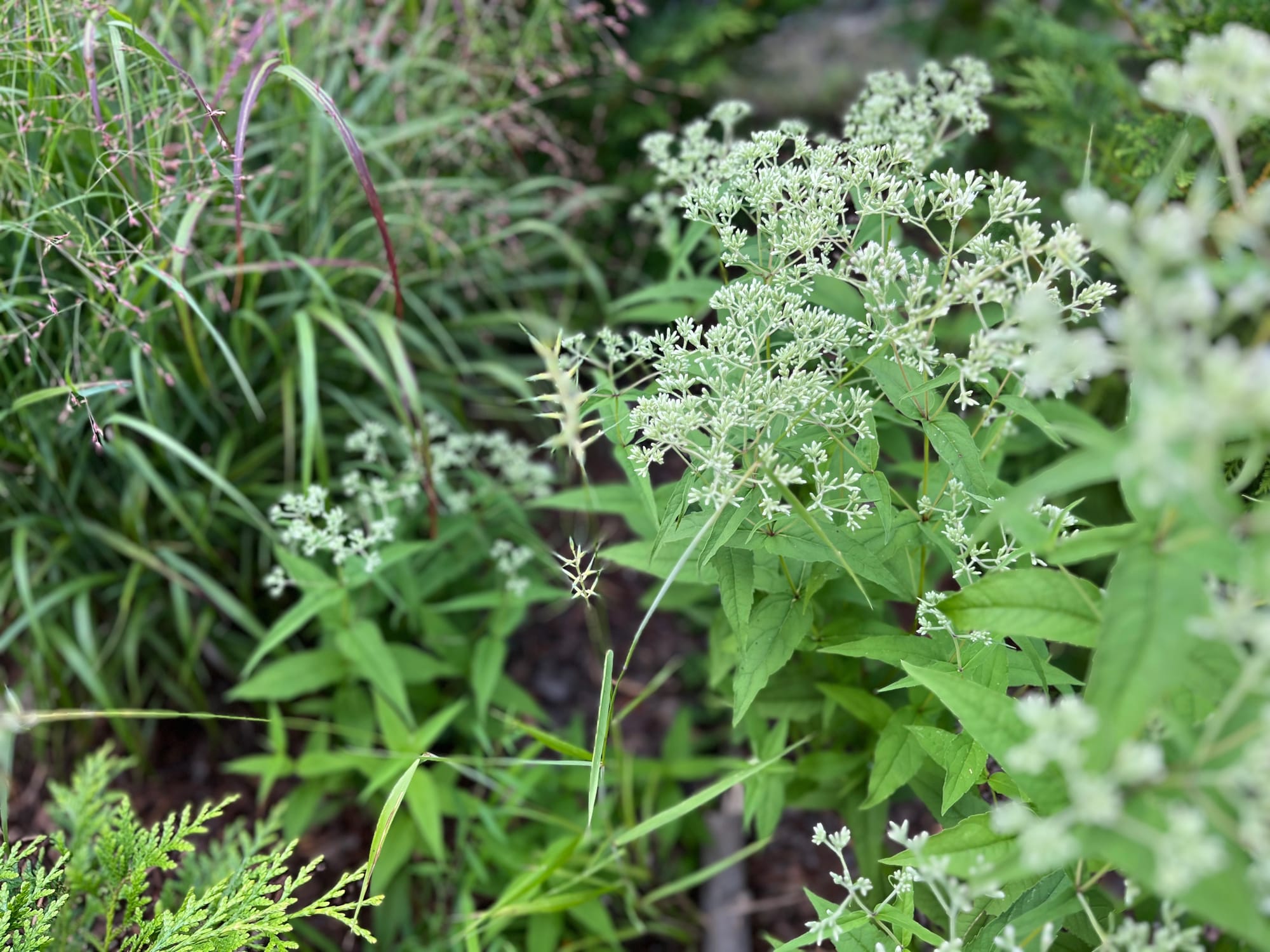
The three little plants I put in last fall have formed a nice clump, and I’ve since added one more across the way from it. (Hoping for more.) There are currently a few feathery brushes of a baby bottlebrush grass (Elymus hystrix) wafting among the flower heads, and those two plants were made for each other. I’m extremely eager to add clustered mountain mint (Pycnanthemum muticum) to the mix, which I have growing in the courtyard but which belongs with these two. I promise photos in the future when I get them all growing together. It promises to be magical.
PLANT DETAILS
• Upland boneset (Eupatorium sessilifolium), native to most of the Eastern half of the US (considered threatened in Minnesota and Michigan and is legally protected in the latter)
• Member of the Aster family, Asteraceae
• Soft green-green, sessile leaves and large, airy clusters of tiny white flowers on purple-tinged stems
• Full sun to part shade, found at forest edges, basically (perfect for me!)
• Grows quickly to 3'-4' tall, 1'-2' wide, blooms mid-late summer to fall
• Drought tolerant
• Spreads by rhizome
• Loved by many pollinators and resistant to deer
This post is free to non-subscribers. If you find it valuable and are inclined to leave a buck in the tip jar, I’d be grateful! And please share it with a friend ...