Hot Tip: Sheet mulching
The easy, chemical-free way to reduce lawn/weeds and increase planting space.

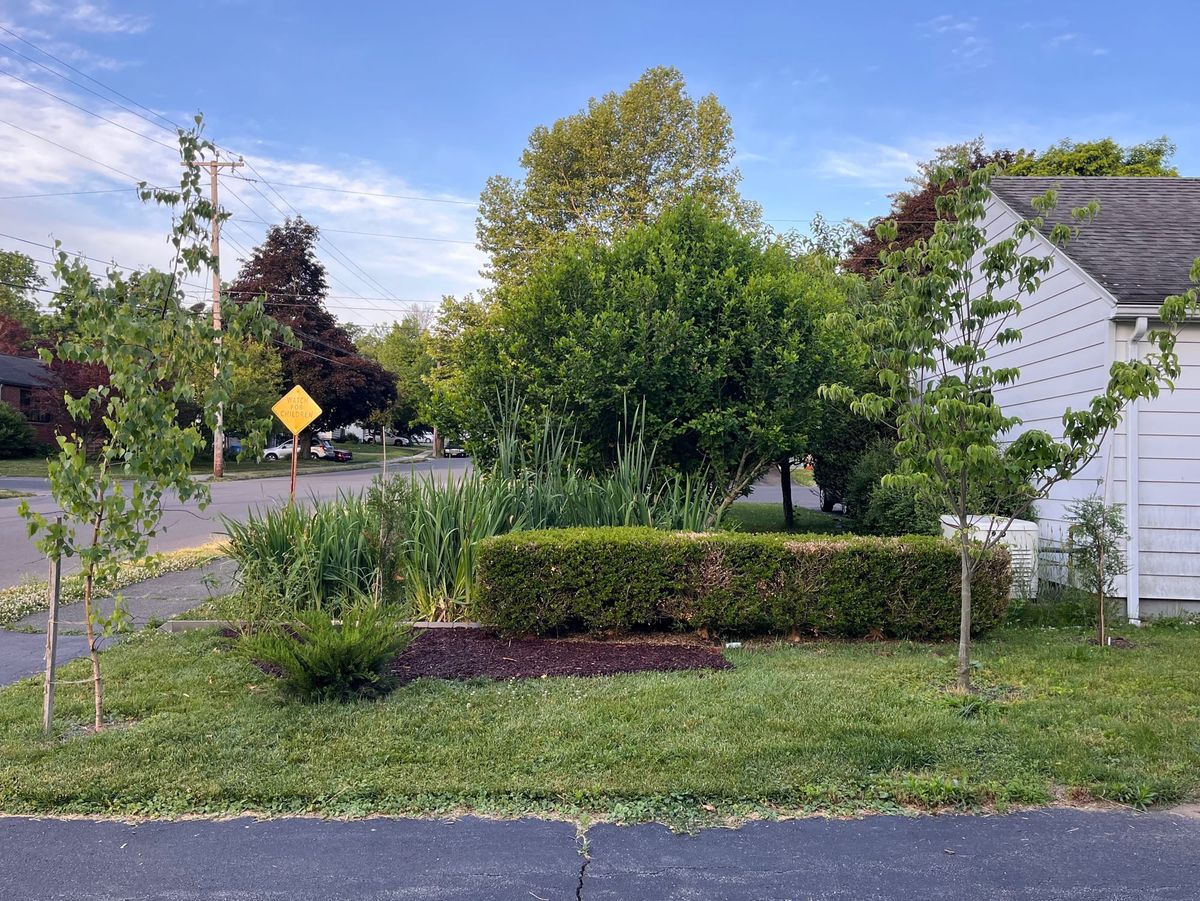
Really simple tip today (not the most photogenic!) that may be obvious to some but is a frequent revelation to others when it comes up in conversation or a visit from someone to my garden. I’ve alluded to it before and will again — including in an upcoming post about my latest garden side project — so I just want to address it head on here, for reference. The ‘it’ I’m referring to is the simple act of stamping out grass and/or weeds to create new planting space (and less lawn) by the method commonly known as sheet mulching. Also sometimes called a ‘lasagna’, there are loads of websites and tutorials available, which tend to make it more complicated than it needs to be. In my experience, you don’t need to do a lot of layering with compost or anything else. Really all you need is some sturdy cardboard and a pile of mulch.
It’s honestly as simple as it sounds: Save up your cardboard boxes, stripping them as much as possible of labels and tape — the rest will float loose eventually — or gather them where you may. When you have enough, lay them out over whatever area you want to convert to fresh planting space, and top it with a few inches of mulch. (Please use organic/undyed mulch!) Then wait for what’s under there to die off over the next few weeks, and start planting into it. (A hori hori knife might come in handy.)
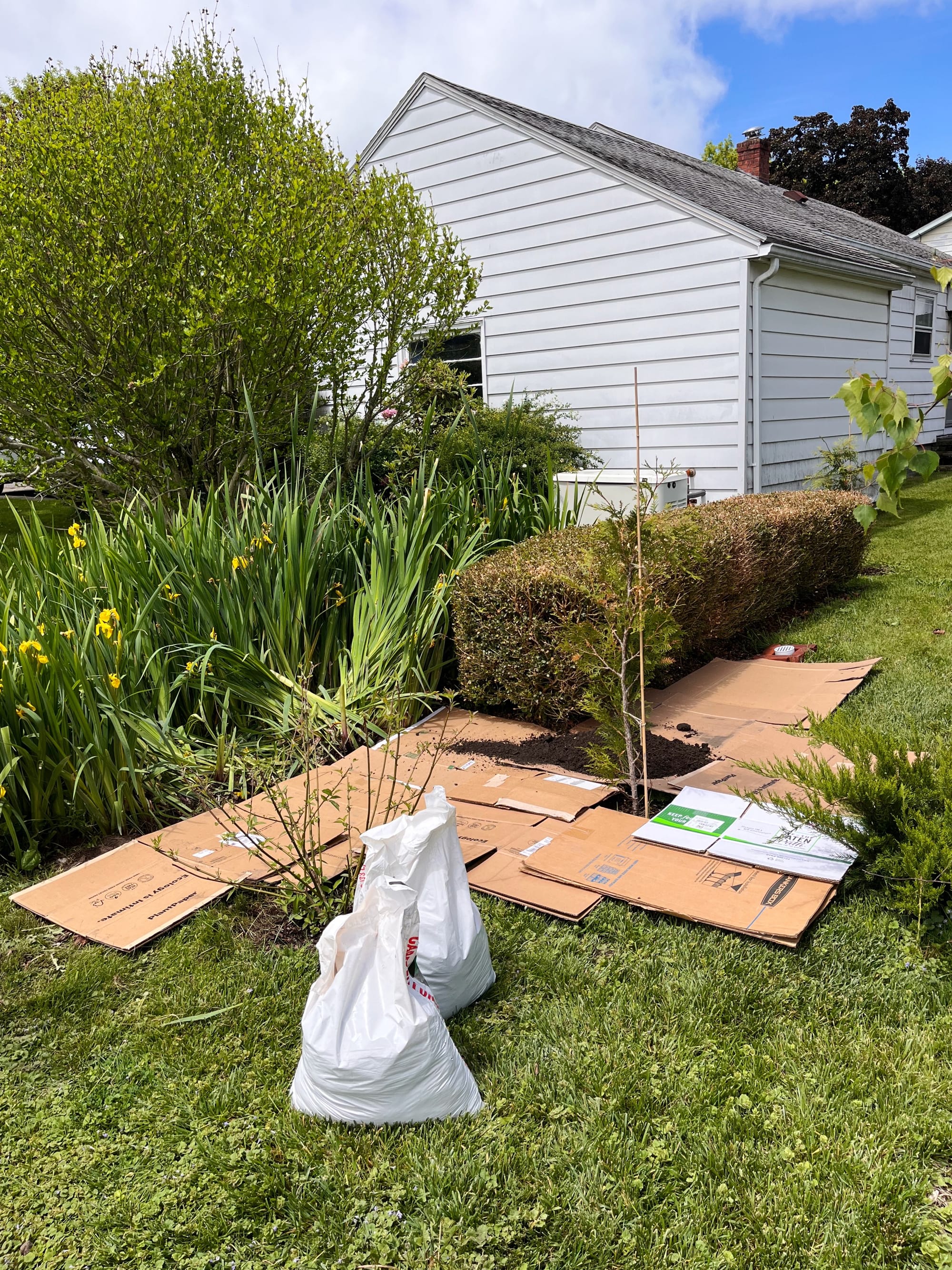
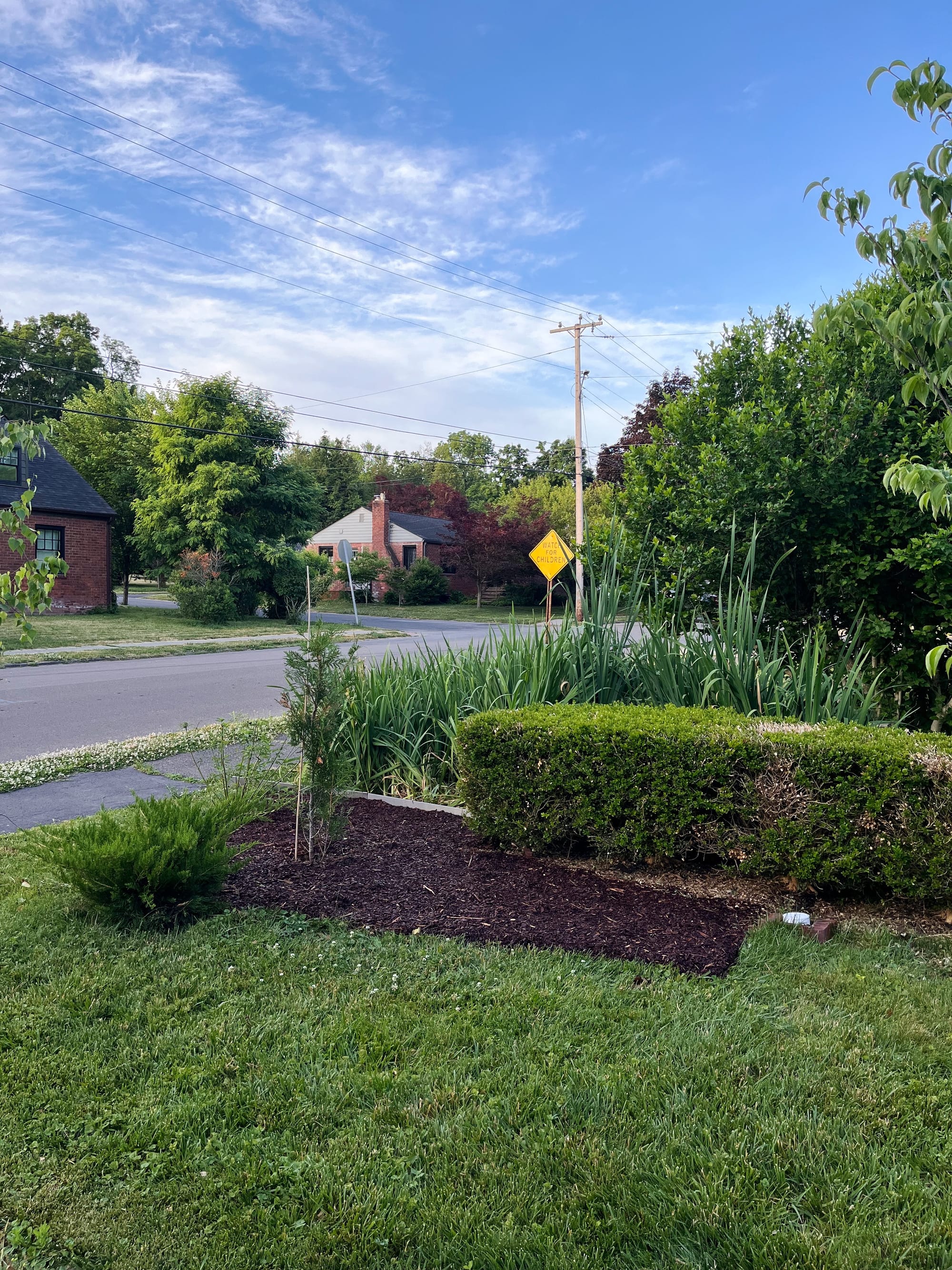
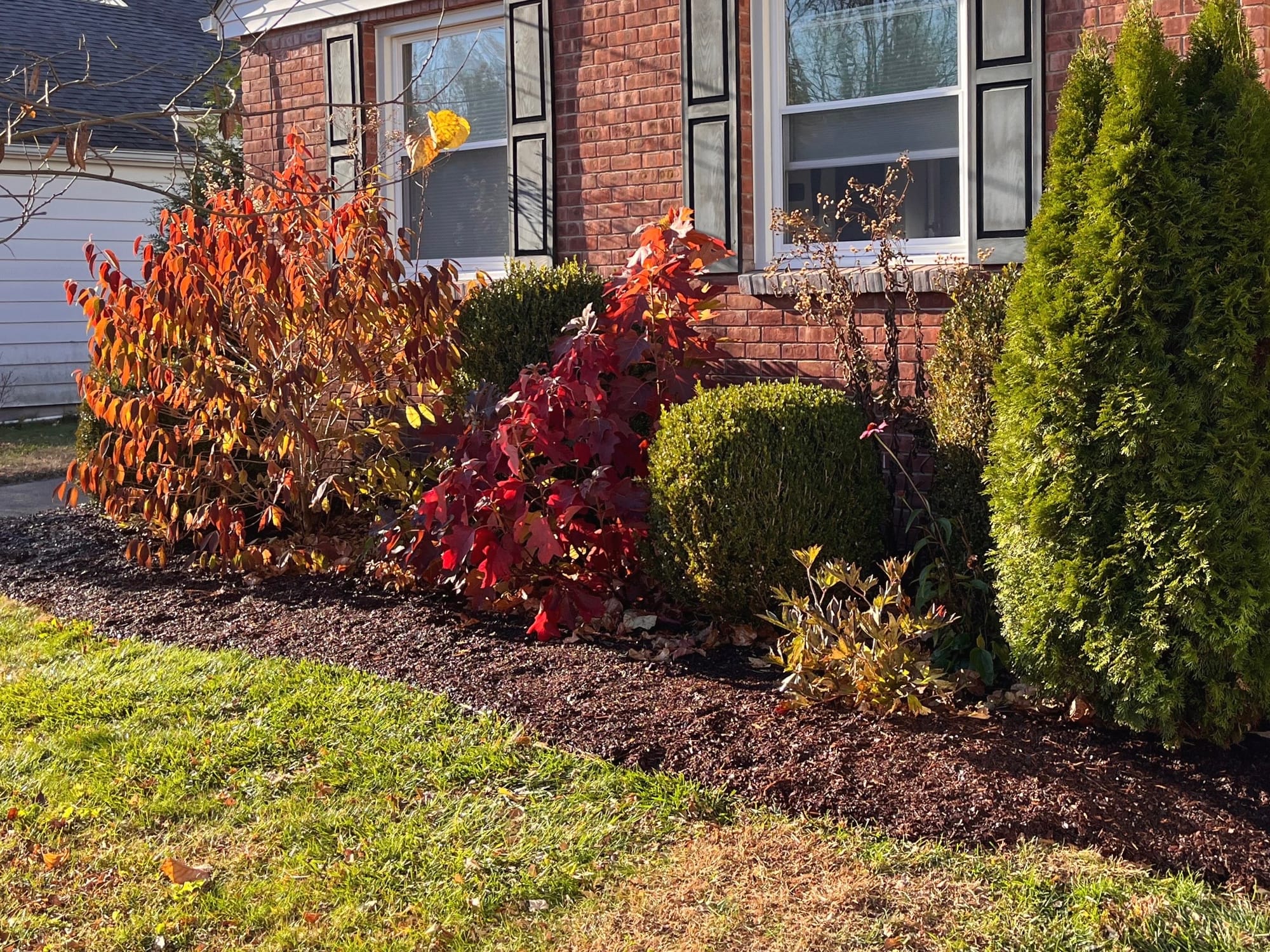
Flattened sturdy boxes form a double-thickness, overlapped at their edges, before being topped with a thick layer of mulch. I’ve since tucked additional smaller boxes under some of the jagged corners to flesh out the shape. Which, as noted above, will expand over time.
The cardboard will break down over time, which you want, but a single layer of thin cardboard may break down before it has any effect at all, so it can be a fine line between too much and not enough. Go for at least double layers of sturdier boxes, overlapped at their edges. (And see the caveats below.)
If there’s a heavy amount of grass or weeds, it might be worth mowing or weed-whacking it as short as possible first, but I’ve done with this with pretty long turf grass. It can be helpful to wet the cardboard as you’re laying it out, before you add the mulch, then definitely soak the whole thing to give it some weight and set it in place. And know that as the grass beneath it dies back, the cardboard and mulch will settle down to the dirt level and no longer be crowd-surfing on top of the grass. At that point you can fine-tune the edges in whatever way you prefer.
THE BENEFITS
• No chemicals employed
• No need to rent a sod cutter or hire someone to remove sod — i.e., it’s accessible and doable!
• The decayed sod and its valuable topsoil remain in place and make great material to plant into, especially as the layer of mulch breaks down
• This suppresses existing weeds in the process, making it easier to manage new ones going forward
• Can be done a little at a time to achieve your long-term goals
• Great circular use of excess cardboard
THE CAVEATS
• This isn’t long-term weed suppression (the cardboard breaks down), and isn’t meant to be — it’s a one-time means to an end
• While it lasts, the cardboard will inhibit the amount of air and water that gets to your newly planted plants’ roots — more so, the thicker it is. So if you begin planting into that area before it’s broken down much, really target hand-watering right at the root systems, and know that rain won’t saturate the surrounding ground as well as it will again once the cardboard breaks down, so mind the roots of anything you’ve got under that cardboard
• Cardboard is not a wholly organic/virgin material. I essentially only use natural brown boxes that are as “naked” as possible (never coated cardboard, or anything heavily printed) and I personally wouldn’t use it anywhere I’m growing food
• If you have fairly weed-free grass (you can see I do not) and access to copious amounts of mulch or wood chips and can apply it like a foot deep, you may not need the cardboard at all
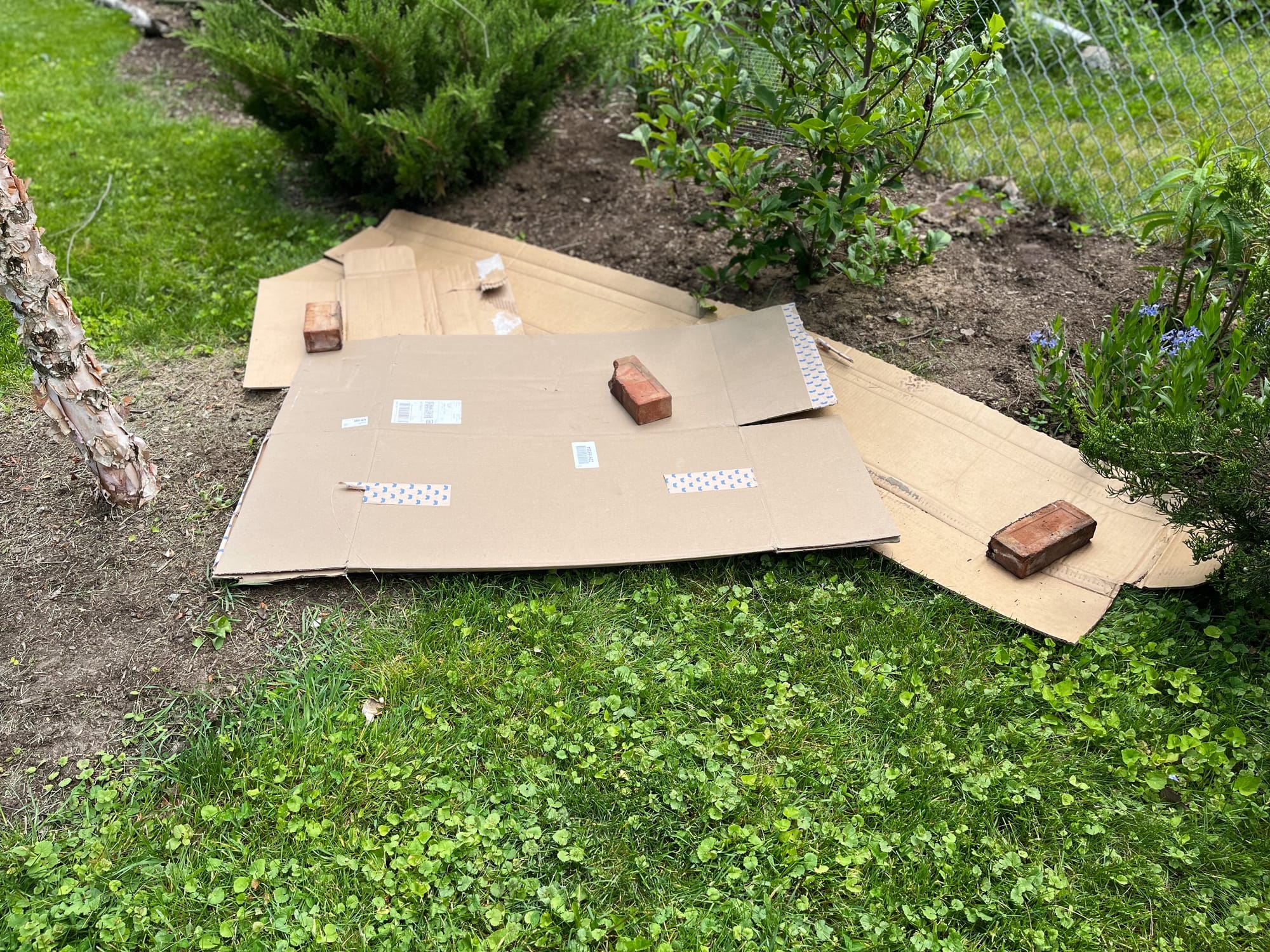
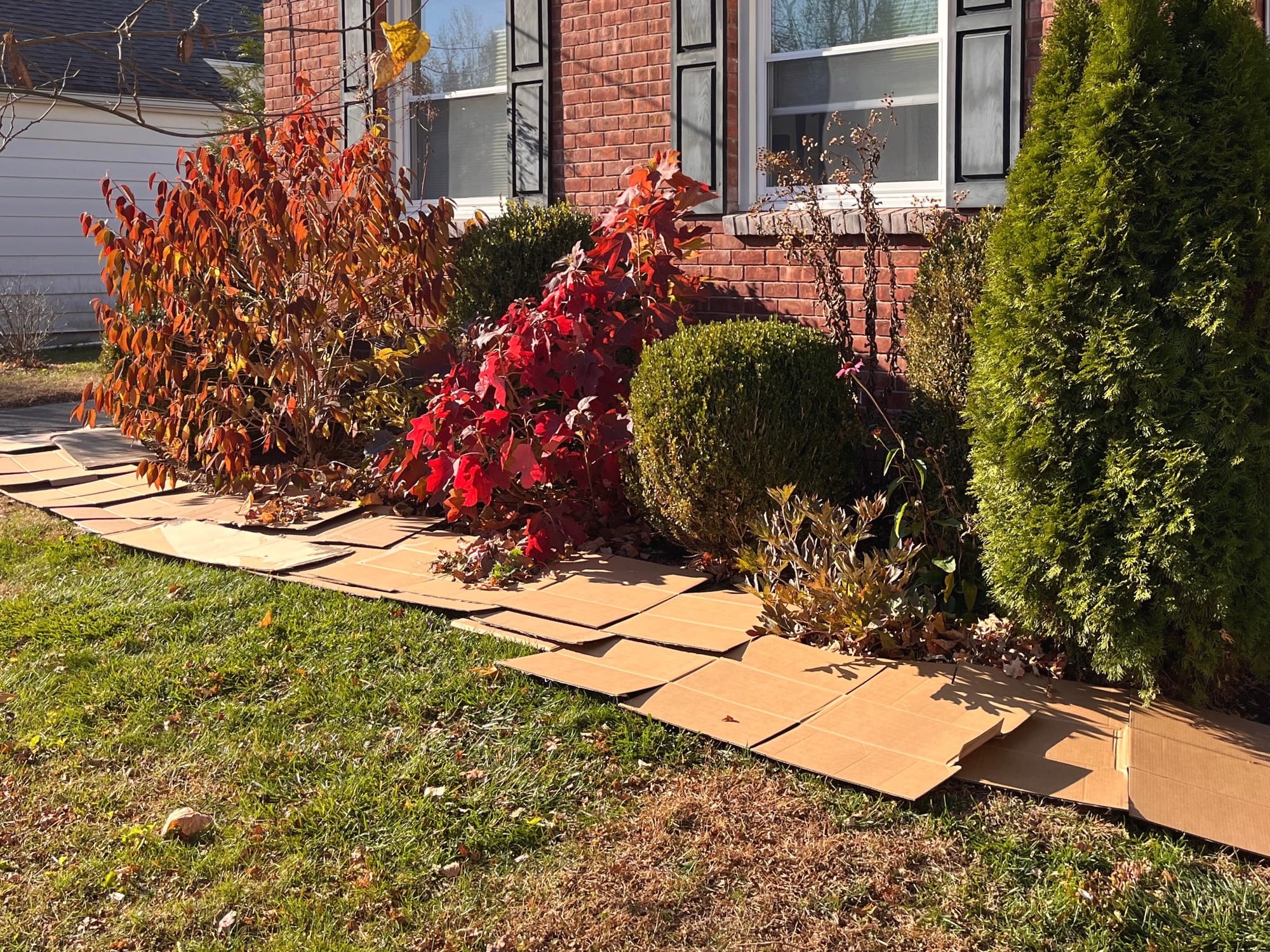
You can also use cardboard between and around existing or newly planted plants, to suppress a major weed problem or prep it for future interplanting. Just keep in mind the caveats above, don’t choke the plants, and think of it as a one-time solution to get the upper hand.
But if like me, you have an abundance of turf grass that you’re trying to convert to planting space, patch by patch — hopefully to rewild it with native plants beneficial to your local pollinator population — this is by far the easiest and most effective method I know.
This post is free to non-subscribers. If you find it valuable and are inclined to leave a buck in the tip jar, I’d be grateful!