Book Shelf: Understanding how plants grow
Thanks to Brian Capon’s “Botany for Gardeners.”

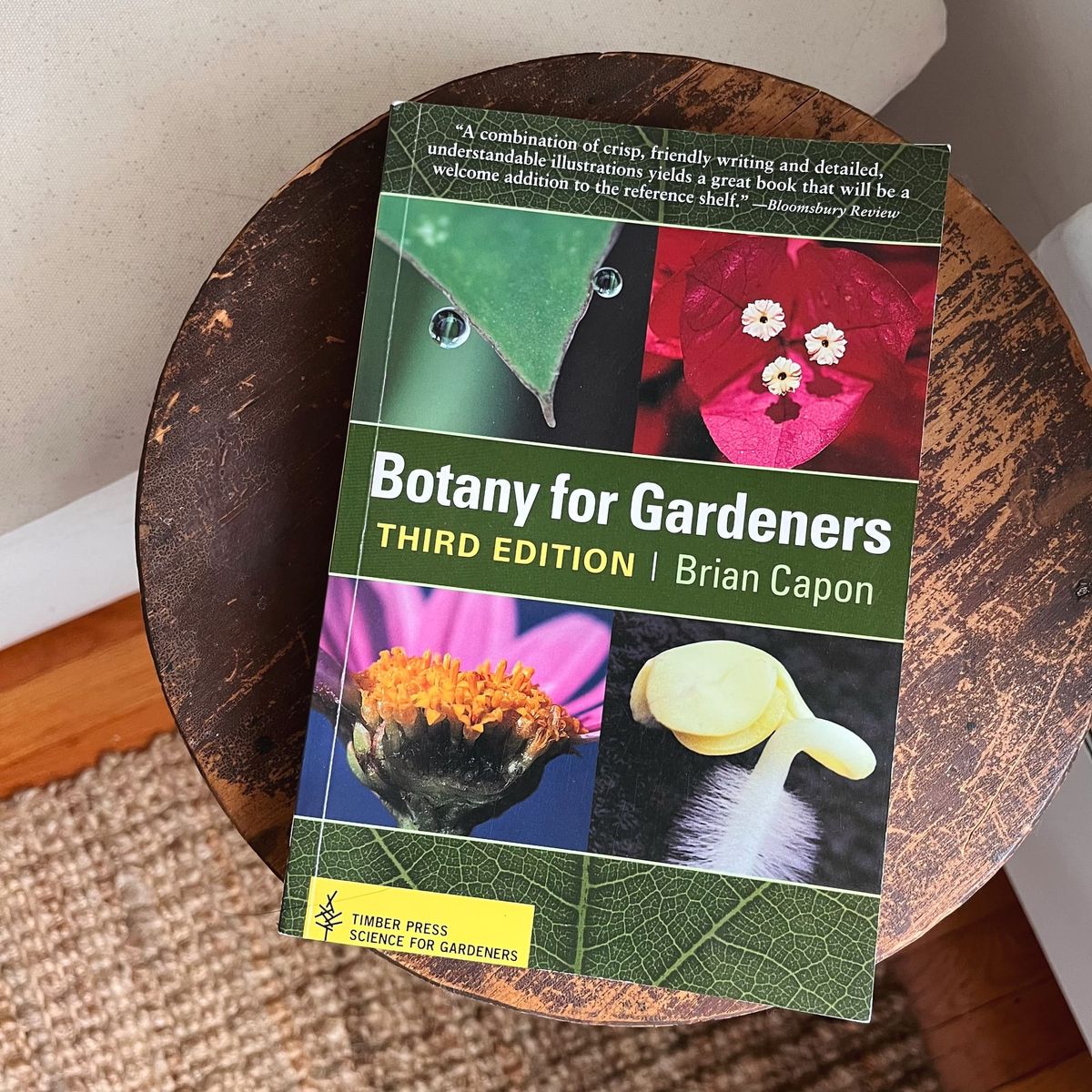
My first class at the school of the New York Botanical Garden has just wrapped up: Intro to Plant Science. I kept saying it was good that I was getting this one done first because I expected it would be the driest of the things I’ll be taking. The text for the class was a book called Botany for Gardeners by Brian Capon, and I not only read it cover to cover (despite the class not covering it all), going back through several chapters more than once, I liked it well enough I think some of you might like it too. If you were to thumb through my copy, you’d not only find copious underlines but multiple instance of "!!" scrawled in the margins.
Some of those exclamation-marked passages are things that are delightful to know, if not particularly applicable to the act of gardening — e.g. the astonishing variety of shapes of pollen grains; how plants make the microscopic embryos contained in seeds; the fact that some flowers have colorful patterning on their petals specifically designed to direct visitors to their nectar wells, or even markings that are invisible to the human eye. The latter is a rare moment where Capon gets a bit poetic about it all: “Some flower pigments reflect the sun’s ultraviolet light — wavelengths visible to many insects but not the human eye. When nectar guides are painted with such pigments, the flower’s pollinators are dazzled by marvelous, iridescent patterns to which we are not privileged.”
Certainly there are some dry bits (to my particular mind), but if you had told me that the chapter about plant growth hormones would be so thrilling I would prattle on about it to my husband that evening, I might have doubted you. Learning the why and how behind so many things I know about plants — like yes, if you pinch or prune the tips of many/most plants it will cause them to get bushier, but why? — has made me feel like I understand plants on a whole new level. Because I do. And I have Capon’s slender and accessible book to thank for it.
Note that last month I said about Wendy Hollander’s beautiful new book that it’s “like the grown-up storybook version of my Plant Science textbook,” which is true. They’re a pretty perfect duo to add to your gardening shelf. Although I’d suggest going with the newer edition of Capon’s book — with a more appealing cover, among other updates — which is what I’ve linked above.
.
I participate in the affiliate program of Bookshop.org — when you buy through my links, I earn a small percentage of the sale. Thank you for your support!