Book Shelf: Wendy Hollender’s showstopper
“The Album of Plant Families” is one to treasure.

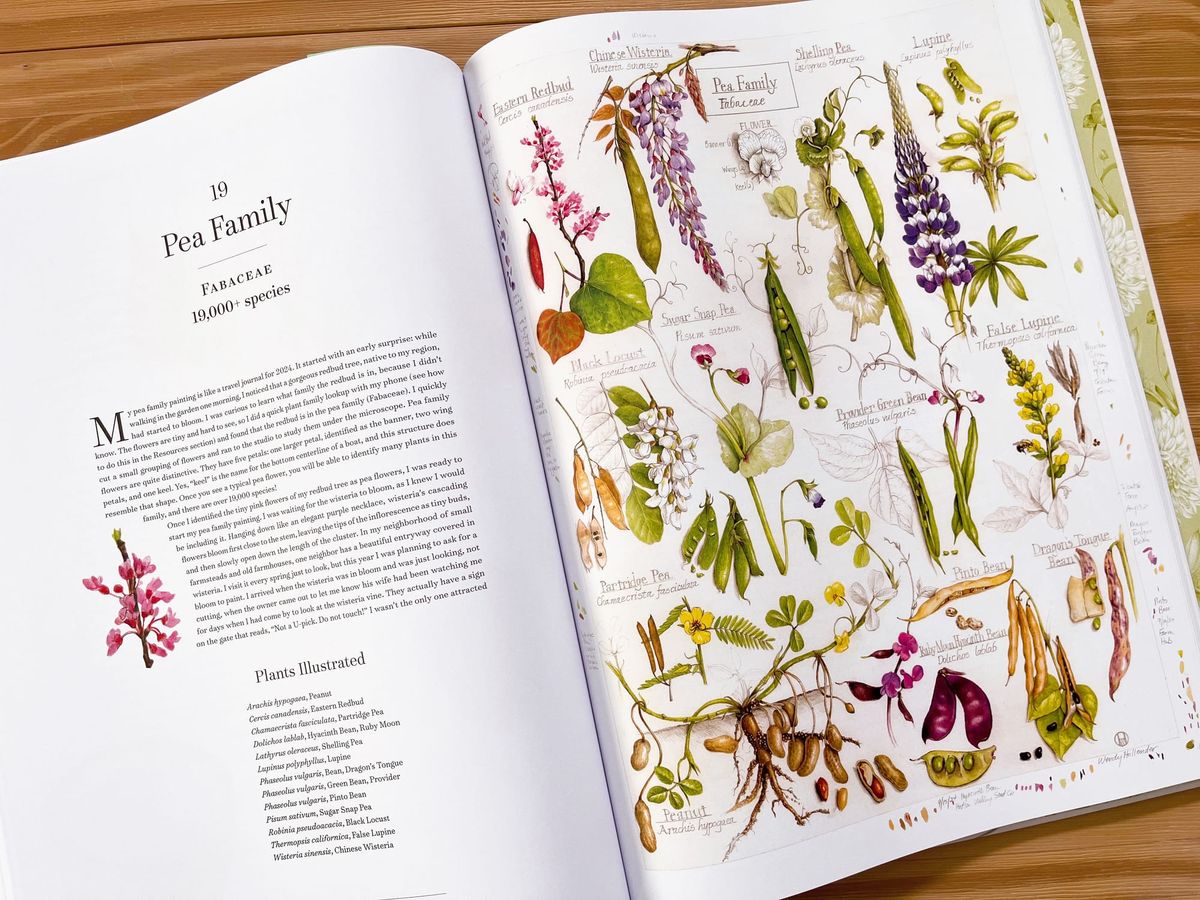
On Saturday afternoon, I had the great good fortune to attend a lively panel discussion about botanical artist Wendy Hollender’s new book, The Album of Plant Families. It took place at a Hudson Valley gallery where they have on exhibit the 24 paintings that make up the core of the book. I’d been hearing about it, and was intrigued by the concept, but wasn’t sure I would invest in it. I will go ahead and tell you right up front that I am in love with this book the way my youngest nephew, when he was four years old, was in thrall to a big, beautifully illustrated book that helped him to understand (in surprising detail!) how the human body works. Meaning, it’s a big picture book full of nice stories from which you almost don’t even realize you’re effortlessly learning all sorts of fascinating science. Or, as I put it to a friend, it’s like the grown-up storybook version of my Plant Science textbook.
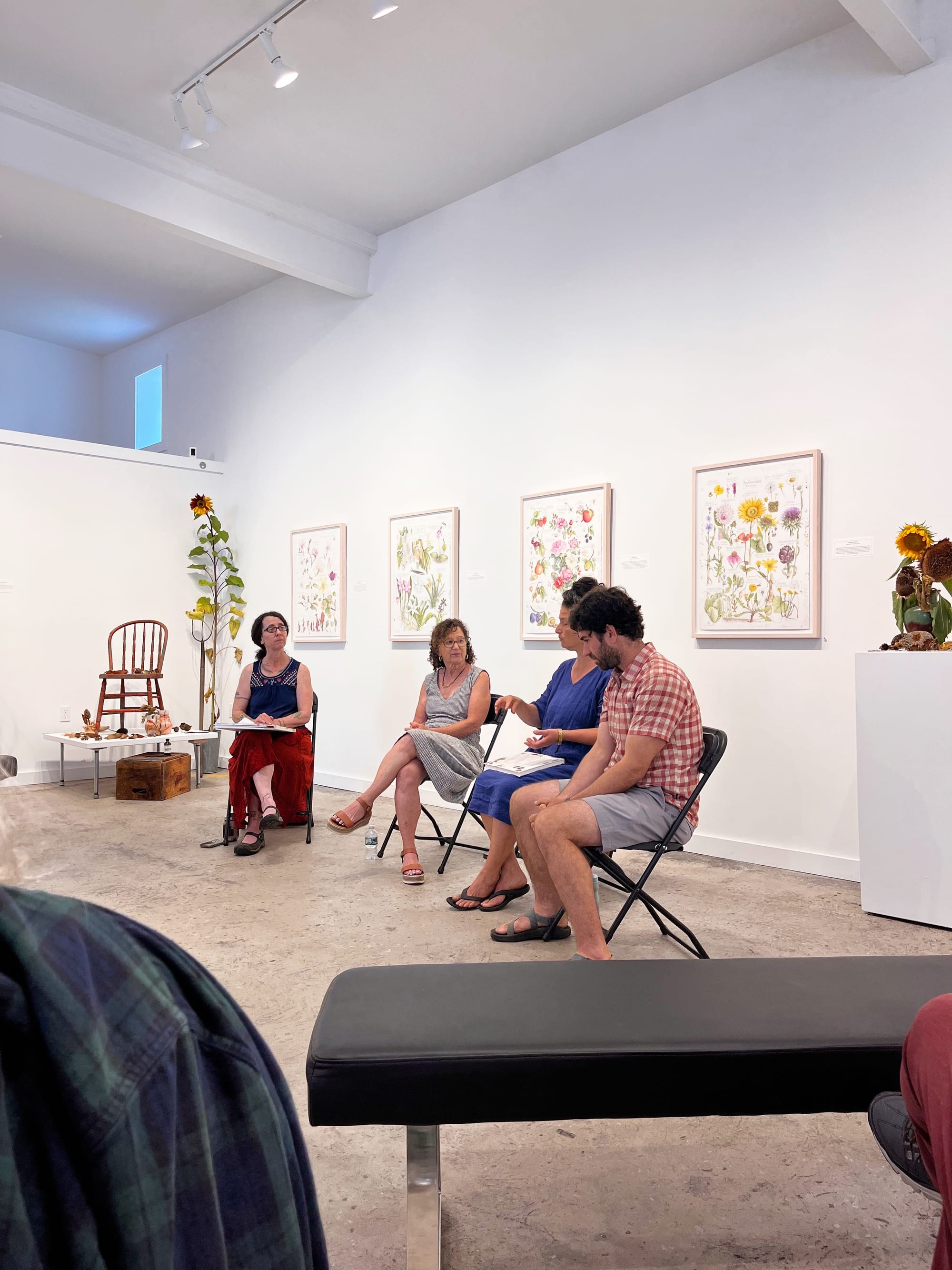
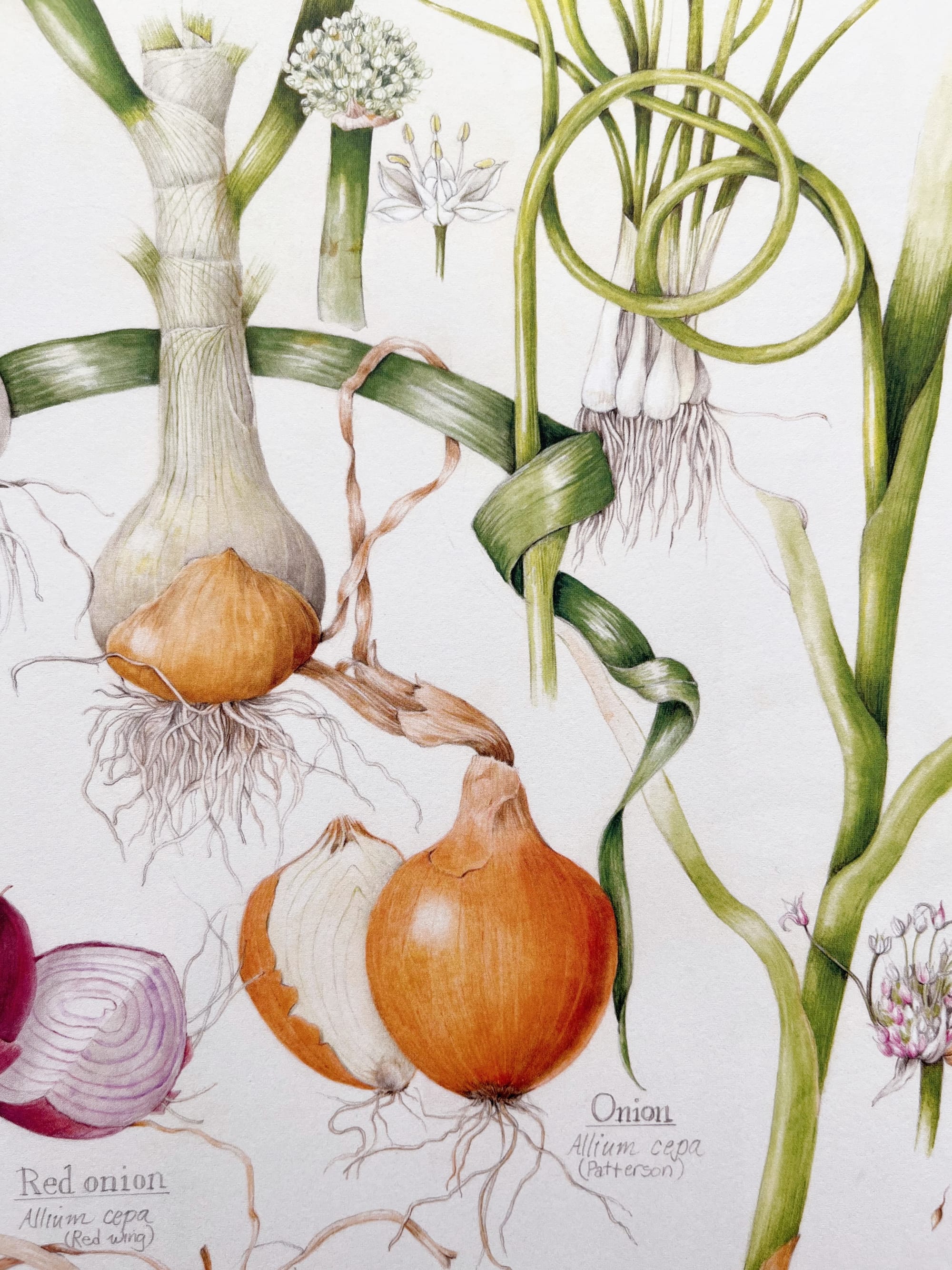
Hollender (second from left) at 68 Prince Street Gallery on Saturday, in discussion with expert family and friends who contributed to the book. At right, an affectionate detail from the allium family portrait, the one that started it all.
Ok, backing up: Botanical artist Wendy Hollender’s new book, The Album of Plant Families: An Illustrated Exploration of Nature’s Beauty and Bounty, centers around 24 large-scale paintings she made over the course of four years, each one depicting multiple members of a single plant family together on one page — from which there is a surprising lot to be learned. Did you know, for instance, that the redbud tree is a member of the pea family? (Fabaceae, 19,000+ species.) That okra, hibiscus and the chocolate tree are all members of the mallow family? (Malvaceae, 400+ species.) Or that alliums (onion, garlic, shallots, leeks ...) are part of the larger Amaryllis family (Amaryllidaceae, 1600+ species) along with daffodils and paperwhites? You find out a narcissus and a chive are cousins and you’re like how could I ever not have recognized that? And those peapods that cover the redbuds in summer now make perfect sense.
But the family portraits are just the jumping off point. The book opens with some basic pointers about both plant nomenclature and identification — i.e., how and why to spot shared family traits, such as stem shape or petal quantities. Plant identification can be useful just for fun, for insights into how things grow, even for not ingesting something toxic or acquiring a terrible rash (e.g., poison ivy, Cashew family). Speaking of potentially poisonous things, mushrooms, which aren’t technically plants, make up 2 of the 24 family portraits. The rest were chosen by Hollender based on personal affinity (the coffee family for herself, tulips for her mother) or botanical significance — from palms and orchids, to grasses and roses. Edible and ornamental plants share space throughout, just as they do in the plant kingdom. She writes: “The plant families [here] together encompass more than 140,000 species, or almost 37 percent of the approximately 380,000 accepted species of land plants identified by scientists.”
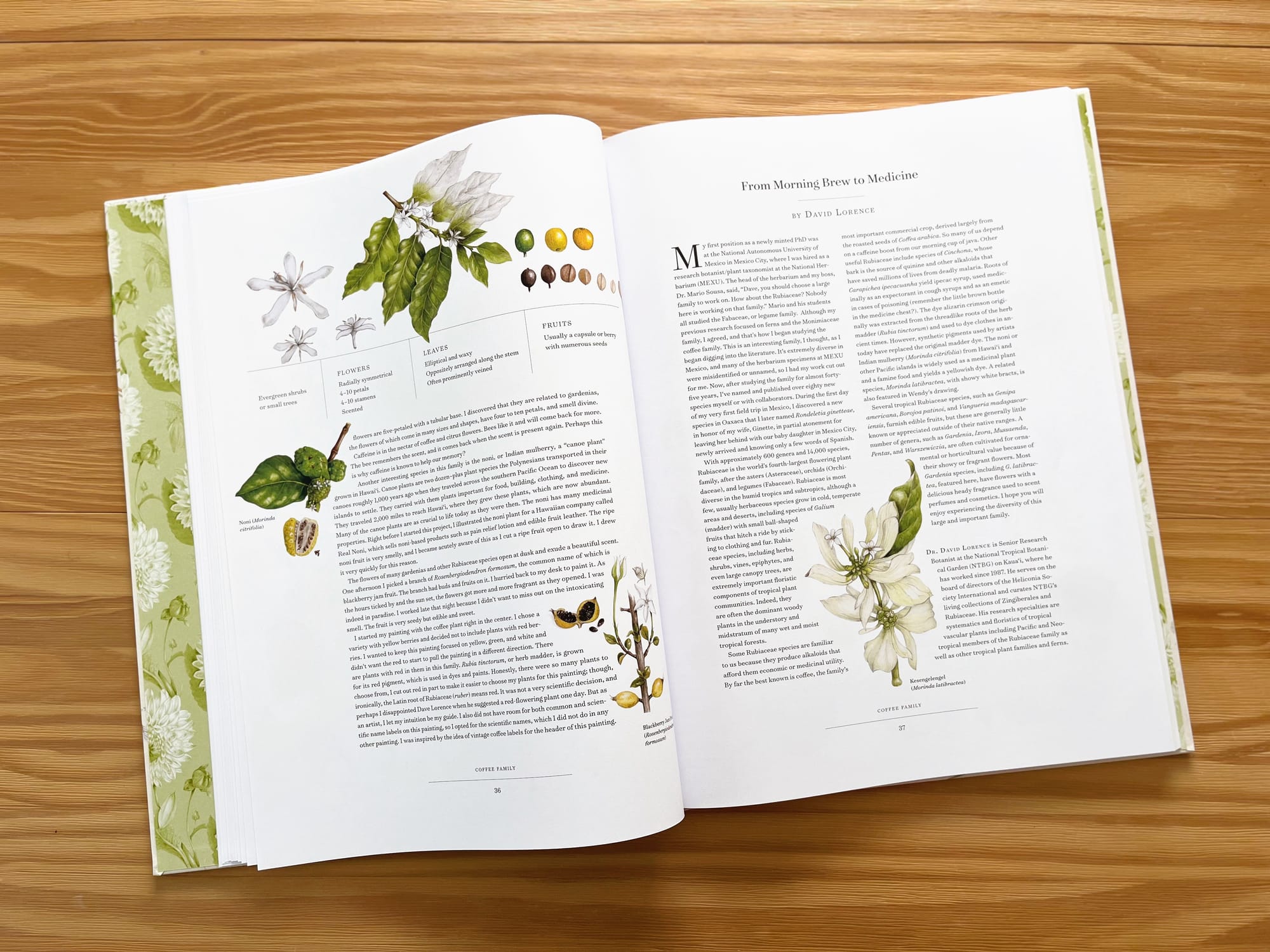
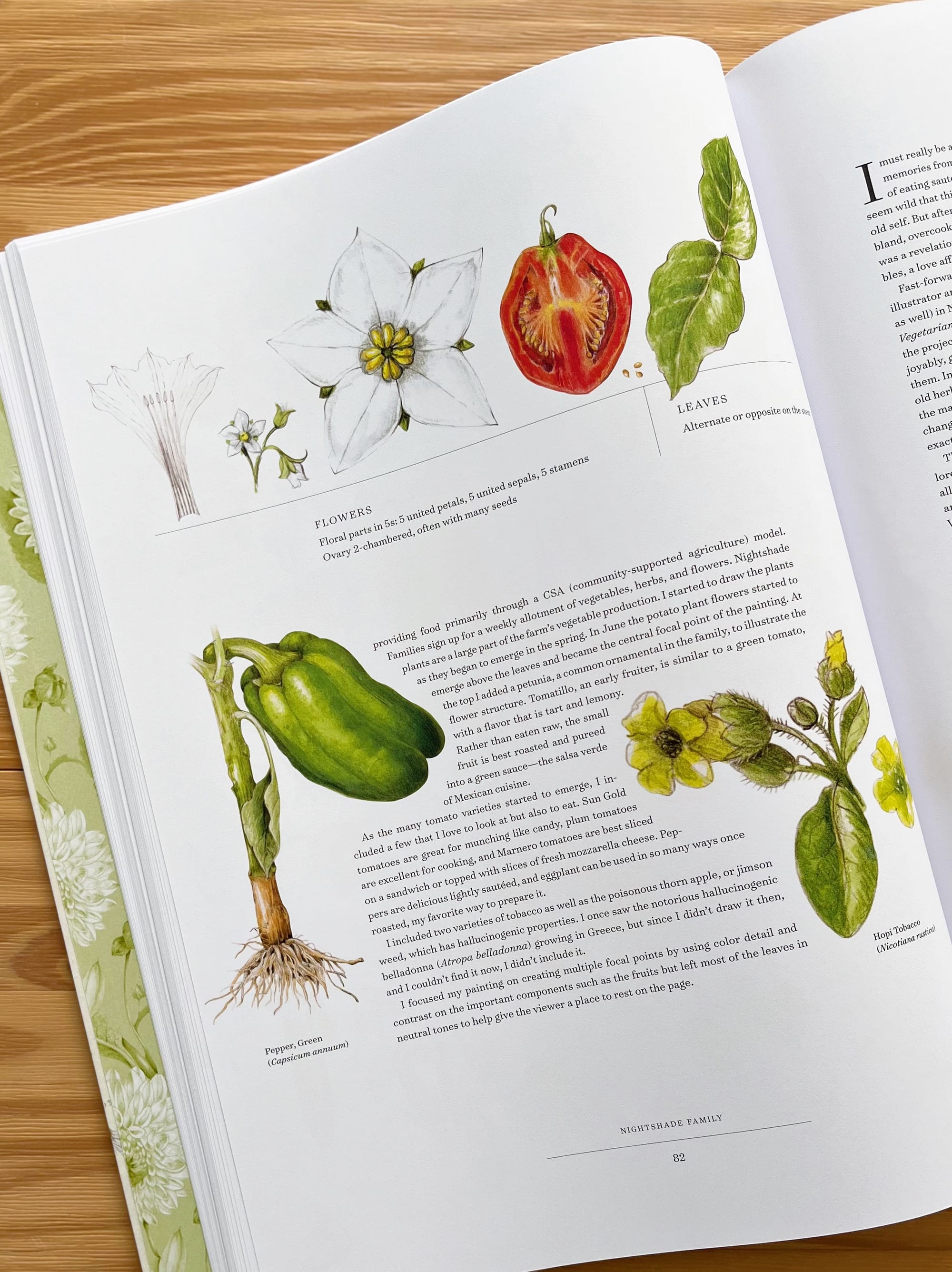
At the talk on Saturday, I believe she said there are over 200 individual plants in the 24 family portraits, and there are additional illustrations scattered throughout the beautifully designed pages. But I still haven’t told you the rest. So along with each portrait, there are specific plant identification notes for that family, along with an essay by Hollender about how the painting came together, how she chose and/or came into possession of the various plants (she painted them all from live specimens) and assorted interesting things to know about that family and its members. Peppered throughout the book are additional essays by various family and friends of Hollender, each a botanical expert of a various sort. And there is even a recipe or two along the way.
I’ll tell you one of my favorite factoids I’ve learned so far. (I’m not rushing through it!) The nectar of flowers on both citrus and coffee trees contains caffeine. That’s one way to get those pollinators coming back for more!
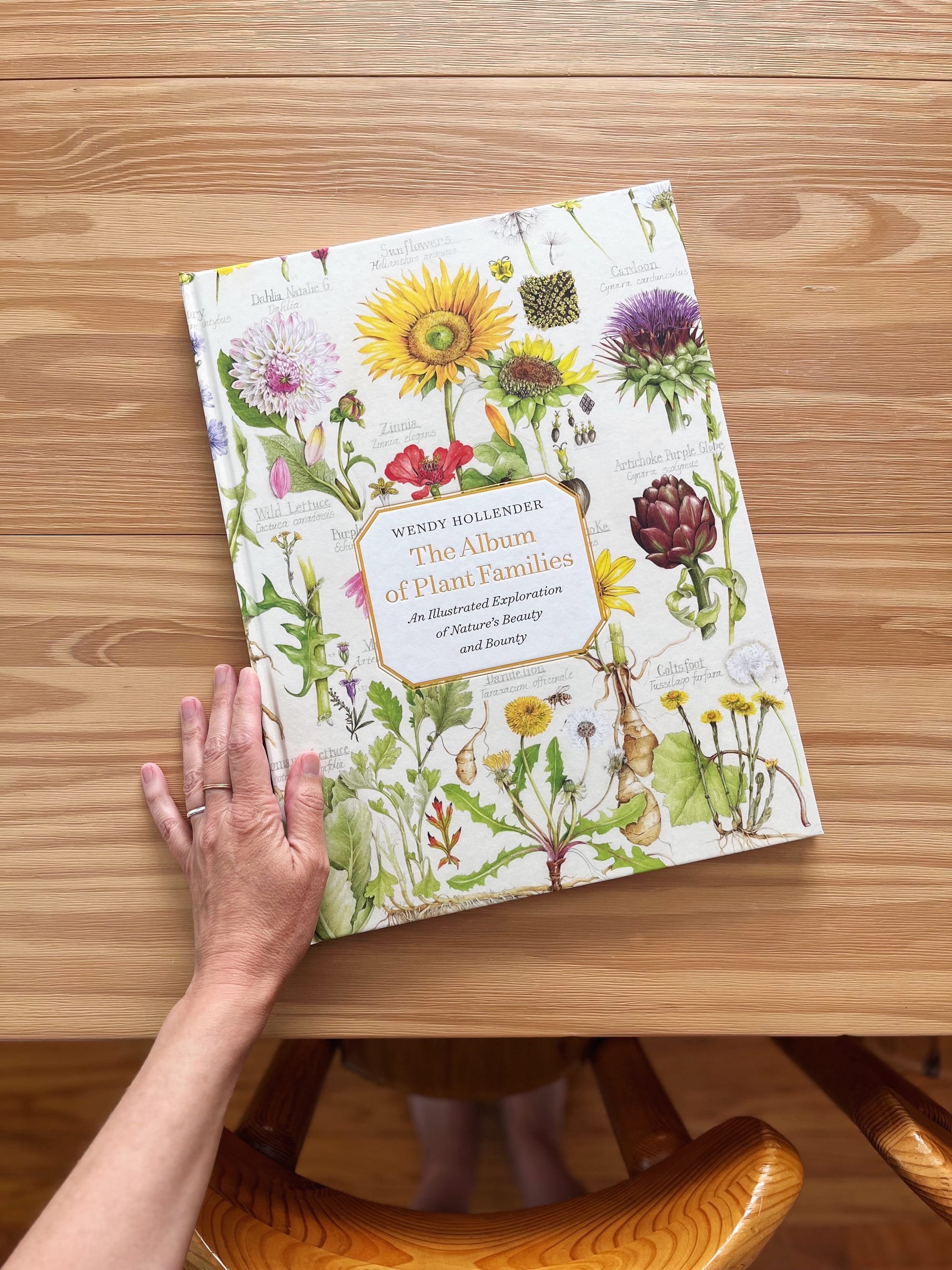
One last thing I should note: This book is BIG. At a little over 12" x 16", it’s slightly bigger than my treasured The Architecture of Trees (notes on that one over yonder), although the latter is about three times as thick. I’ll be very happy to have the pair of them shelved together forevermore. You should definitely go ahead and put The Album of Plant Families on your holiday wish list, or make note of it for a plant-loving friend or family member.
And if you’re in or near the Hudson Valley, the 24 paintings are on view (and for sale) at 68 Prince Street Gallery in Kingston NY through August 9th.
.
I participate in the affiliate program of Bookshop.org — when you buy through my links, I earn a small percentage of the sale. Thank you for your support!