Linking About: Violet history, climate optimism, Miss Willmott’s Ghost ...
... and other worthwhile links to peruse.

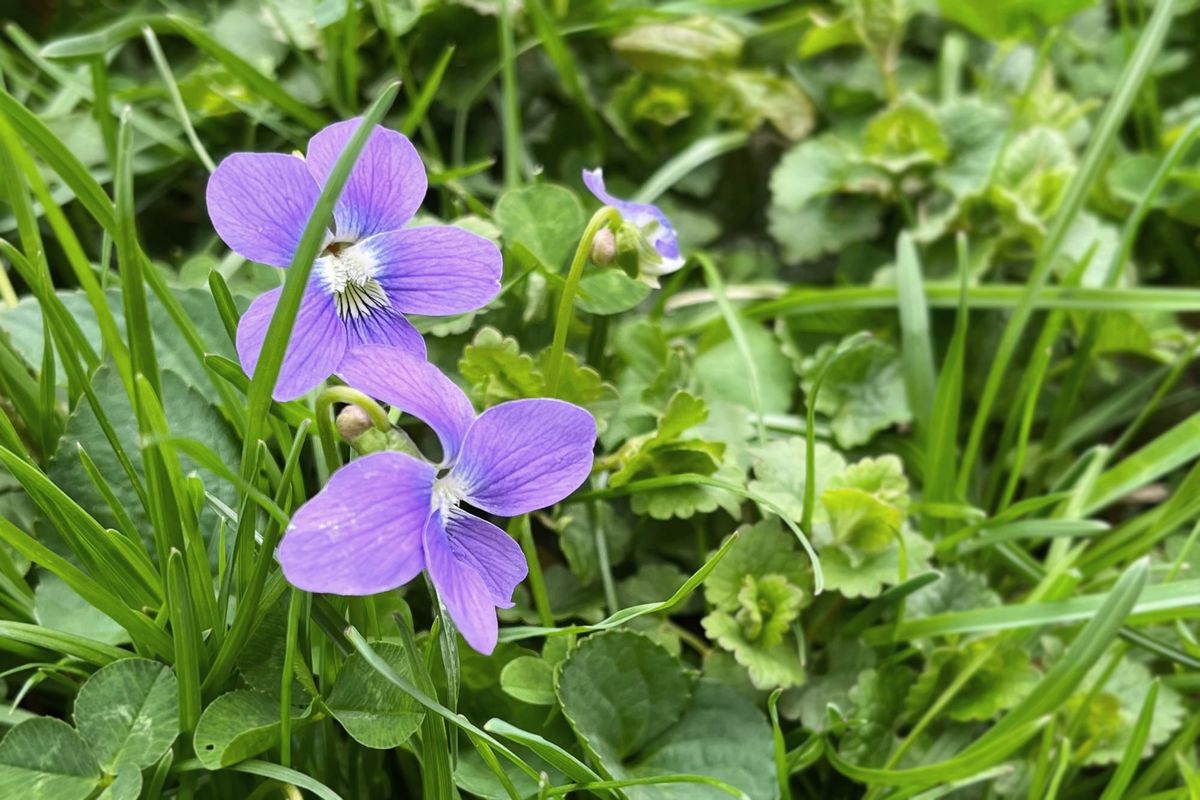
After I posted about loving the violets woven through the grass and weeds in my lawn this spring, my friend Katrina alerted me to the fact that, at a time when they were all the rage, our beloved Hudson Valley — and specifically the Rhinebeck area — used to be the violet capital of the world. Multiple factors contributed to the decline of the flower’s popularity, both culturally and agriculturally, one of which is a bit of LBGTQ history. So I’m both tardy in sharing the link and happy to coincidentally pass it along during Pride month.
That’s below, along with several other links I hope you’ll find worth your time, from the inspiring to the infuriating—
• ‘As with most fashion statements, this one faded. In the 1920s, Victorian esthetics gave way to modern, more-casual and comfortable clothing styles. Big, bulky corsages had no place on a flapper dress, and the violet became known as “your grandmother’s flower.” There was a brief rebound in the 1930s, thanks mainly to the first Mrs. Vincent Astor and to Eleanor Roosevelt. A big fan of the flower and a champion of local industry, the First Lady wore large corsages of Dutchess County violets at FDR’s inaugurations. But the resurgence did not last. ...’
— Rhinebeck, NY: Violet Capital of the World, Hudson Valley
• For those of you who might enjoy a Summer Challenge: Have you made your bucket for the Mosquito Bucket Challenge from Homegrown National Park? Or joined the Less Lawn, More Life Challenge from Wildr? (I’ve done neither, but support both!)
• If you’re looking to reduce lawn and add some native plants instead, but don’t know where to start, I haven’t seen a more straightforward solution than these roll-out gardens from Ecoplantia.
• “My research group and I did a study where we listened to the soundscapes of recovering ecosystems. The acoustic recovery is unbelievable: from the static sound of a degraded pasture to the high- and low-frequency sounds of thousands of birds, animals, howler monkeys, and insects. We statistically compared those sounds to the 100,000 most frequently downloaded songs on the internet, and we showed that the recovering ecosystem sounds statistically closer to music than the degraded ecosystems. Costa Rica has become objectively more beautiful sounding while the economy has boomed, all because it distributed a tiny amount of money to build socio-ecological feedback loops.”
—A Scientific Case for Climate Optimism with Tom Crowther (author of Nature’s Echo: Harnessing Ancient Feedback Loops to Heal a Changing Planet), Atmos
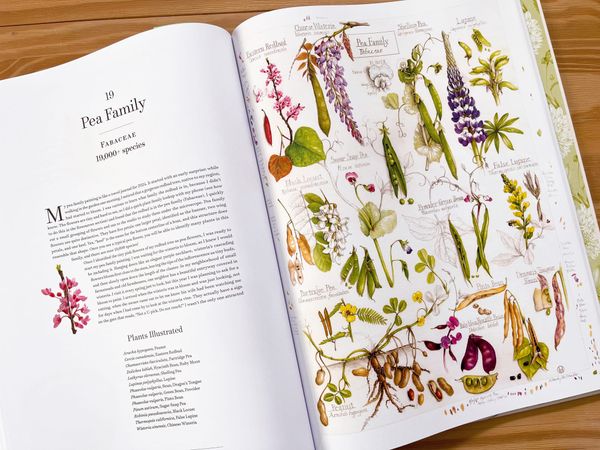
• Favorite garden photo I’ve seen lately — by Clare Coulson, author of Wonderlands — starring a plant I’ve always dreamed of growing.
• Also enjoyed this set of pics from the newly restored garden at Benton End (now open to the public), which I hope to visit someday.
• “You’d be forgiven for thinking that the recent epiphany in gardens and mental health is a new discovery, but gardens have long been linked to good health and quiet reflection. In fact, the late 20th-century rift in our relationship with the natural world can be seen as a historical blip in an otherwise unbroken bond between man and nature. ...”
—[A short history of] The Inextricable Link Between Garden[s] and Happiness, House & Garden
That said:
• “It broke me to realize that in the Hamptons, plants are covered for the winter while people are left outside in the cold with nothing.”
—Where Billionaires Summer, a Gardener Died in the Snow, New York Times (free article — difficult but important reading)
Got a good link to share? Feel free to drop it in the comments! Happy weekend—