This is my Christmas morning
A couple of my best sources for you, along with my native plant windfall.

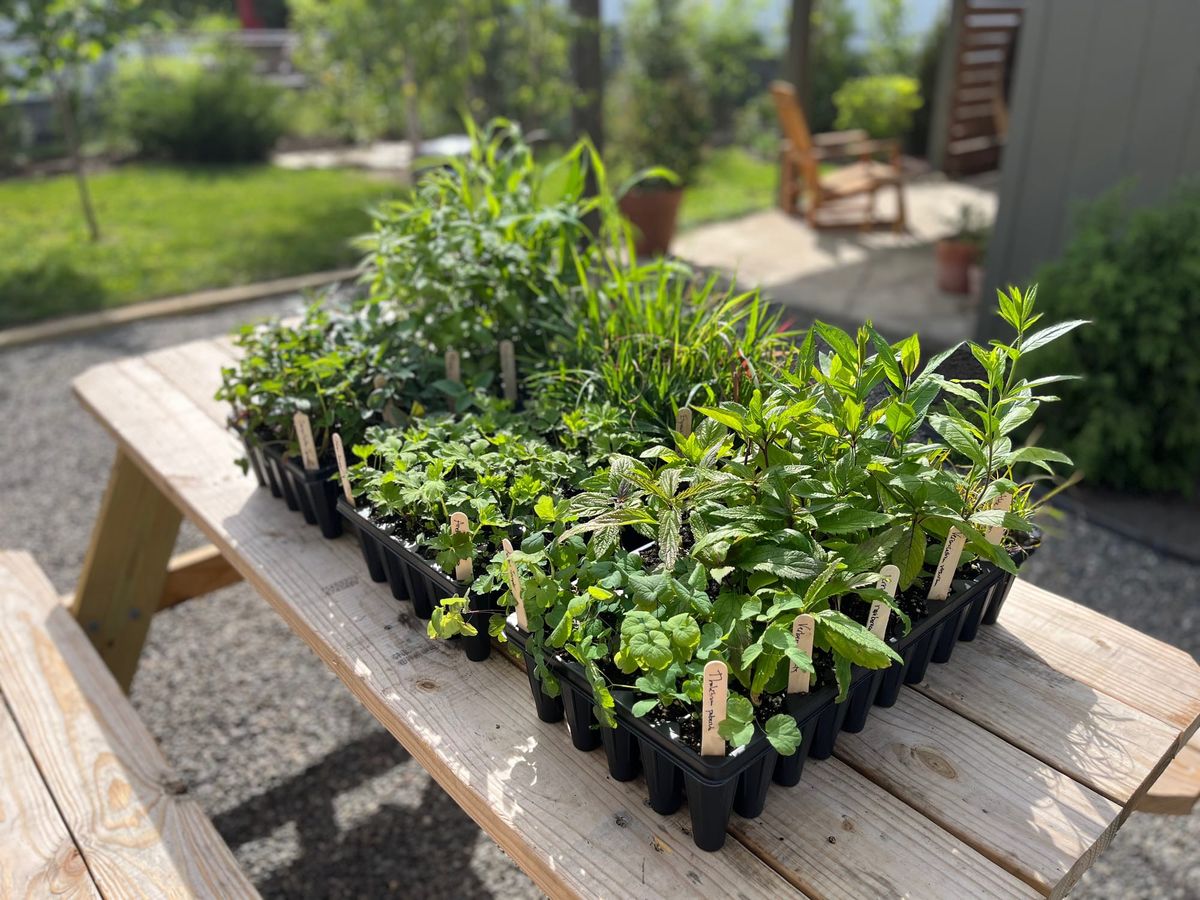
We don’t really do Christmas at my house. It’s just the two of us, if we’re at home, and neither of us grew up with Christmas as a big elaborate gifting event. Some years we just think of something we need or want for the house, and get it on sale; other years we’ve moved and/or done home improvement projects and feel tapped out. Either way, we don’t wake up Christmas morning eager to see what’s inside any wrapped packages. And honestly I kind of miss that anticipation — having wanted something so badly and believing you’re about to have it in your hands. Even though we had a relatively modest number of gifts to open each year, when I was a kid, it became a tradition for each of us to open one present on Christmas Eve. So I guess really last night was my Christmas Eve, and this morning I can’t wait to hop out of bed and play with my new toys. By which I mean, I finally got my long-anticipated plug trays!
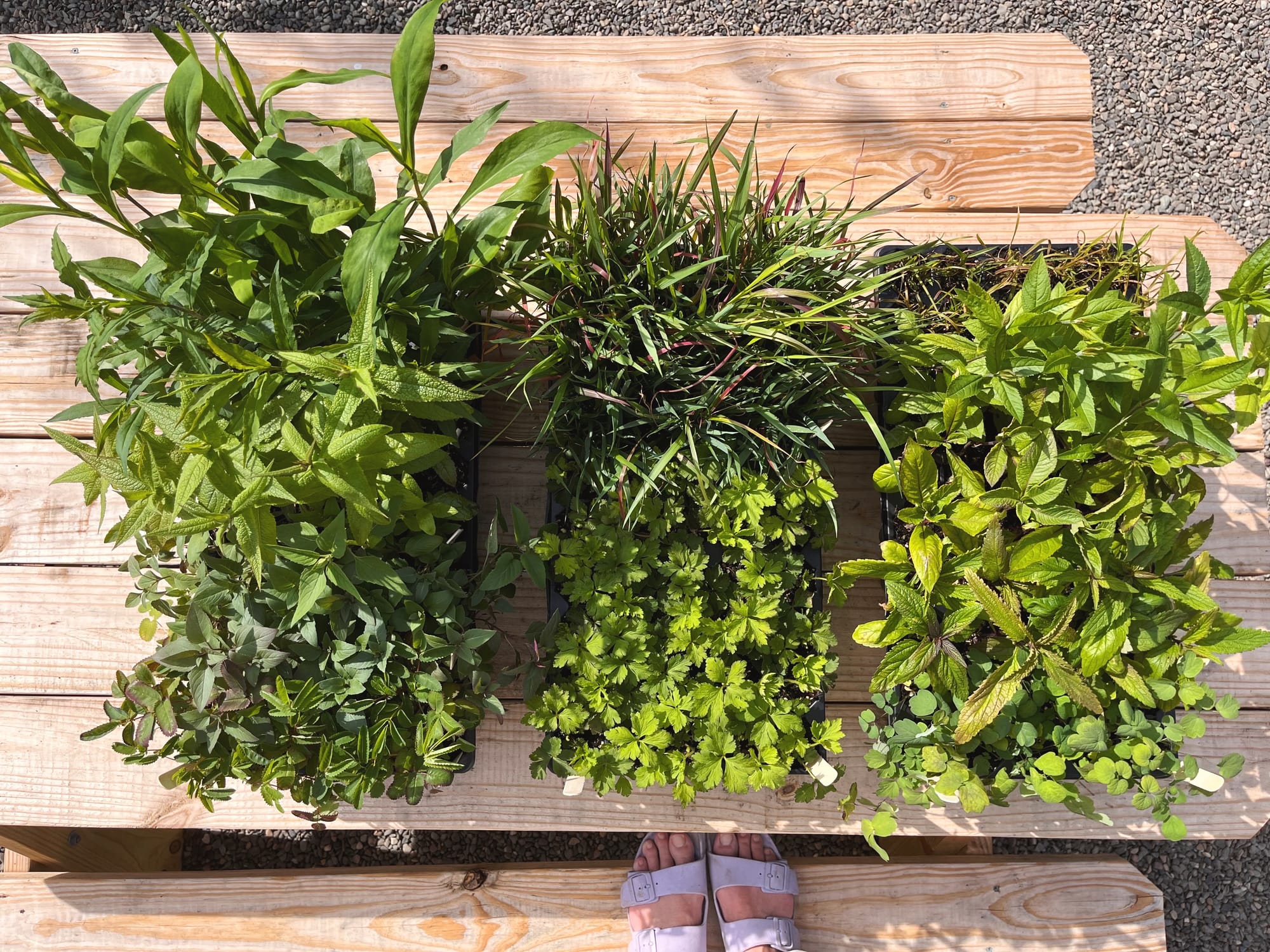
It’s been long enough since I did the plant research and placed the order that I felt like I needed to recap it for myself (... who wants what, who gets how big ...) and thought I’d share the list for any of you who might want to make space in your garden for any of these beauties, if they’re new to you too. (ICYMI: I’m not a new gardener, but I am new to Northeast/NY gardening).
I’m hugely thankful to Barkaboom Native Plants for making their plugs available to retail customers each spring without having to buy a full tray per plant. They gave the option of splitting each 50-plug tray into either five 10s or two 25s — and for less than three bucks apiece, which made it possible for me to get what feels like an embarrassment of seedling riches at a doable price. Still an investment, for sure, but this is a whole future garden in three little trays — truly the gift that will keep on giving.
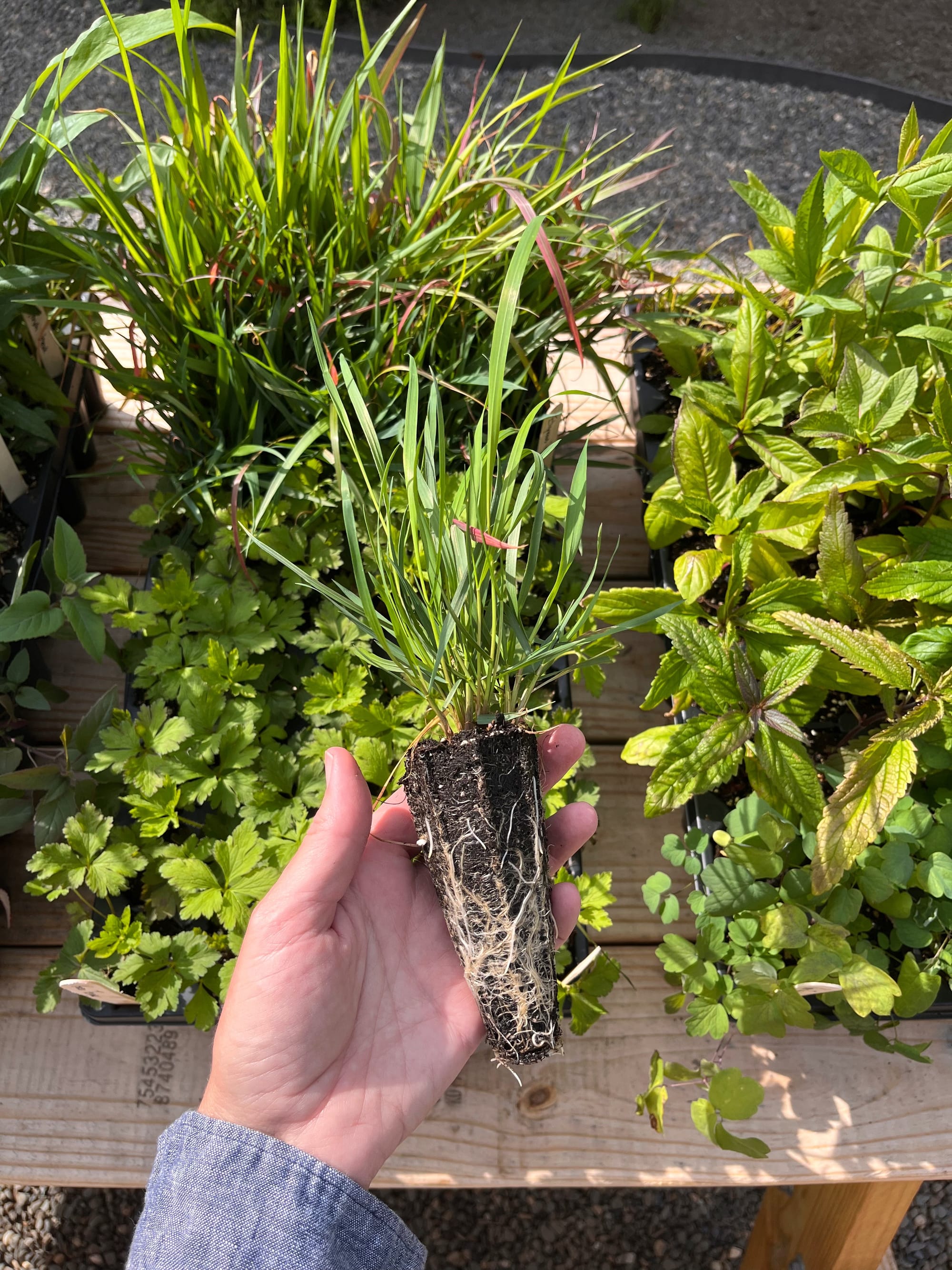
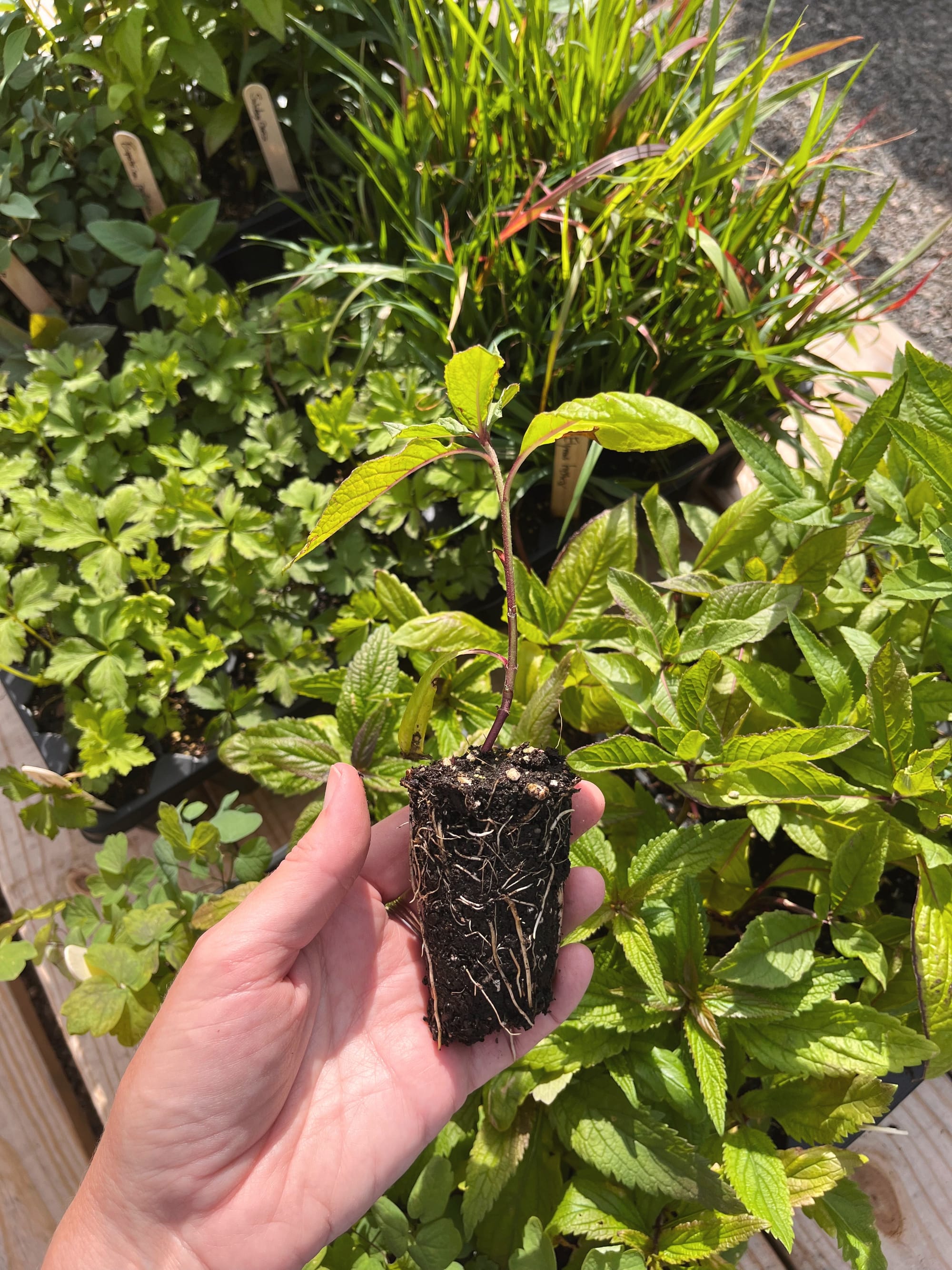
So healthy! Bottlebrush grass on the left, ironweed on the right.
Here’s what I get to start planting this weekend, twelve plants in all, listed from tallest to shortest — and I have another great resource note for you below:
• New York Ironweed (Vernonia noveboracensis)
sun to part-sun, dry to wet soil, up to 8' or more
Another ten of my beloved!
• Culver’s root (Veronicastrum virginicum)
sun, average to moist soil, 4'-6'
If I could only have three of these twelve plants, it would be the thimbleweed, the meadow rue, and THIS. Big tall white candelabra blooms in summer that persist as architectural seed head skeletons into the winter, and deer resistant. I’m planning to test just how much moisture it needs, will plant it in 3 or 4 different spots. Barkaboom says: “Visited by butterflies and bees during bloom period. Larval host to buckeye butterfly.”
• Common boneset (Eupatorium perfoliatum)
sun to part-sun, average to moist soil, 4'-6'
This native meadow wildflower looks to me like if you crossed yarrow with Joe-Pye weed (which I’ll be planting it next to). Big, white flower clusters from summer into fall, slow spreading by rhizome, low maintenance, well-behaved and deer resistant. But it does prefer moist soil.
• Tall meadow rue (Thalictrum pubescens)
part-sun to shade, prefers moist but will tolerate dry shade, 4'-6'
Another one I am just wildly excited to plant, this is a damp meadow denizen that will reportedly tolerate dry shade, but might start to yellow sooner than it will in a moist spot. It’s a big tall woodland-y dream plant, with white blooms in summer held high above fluffy green foliage. I’m eager to test its tolerances and will be planting it in a variety of spots, but I expect it to do well and look great against the back of the house. Loved by pollinators of all kinds, only moderately deer resistant. Fingers crossed.
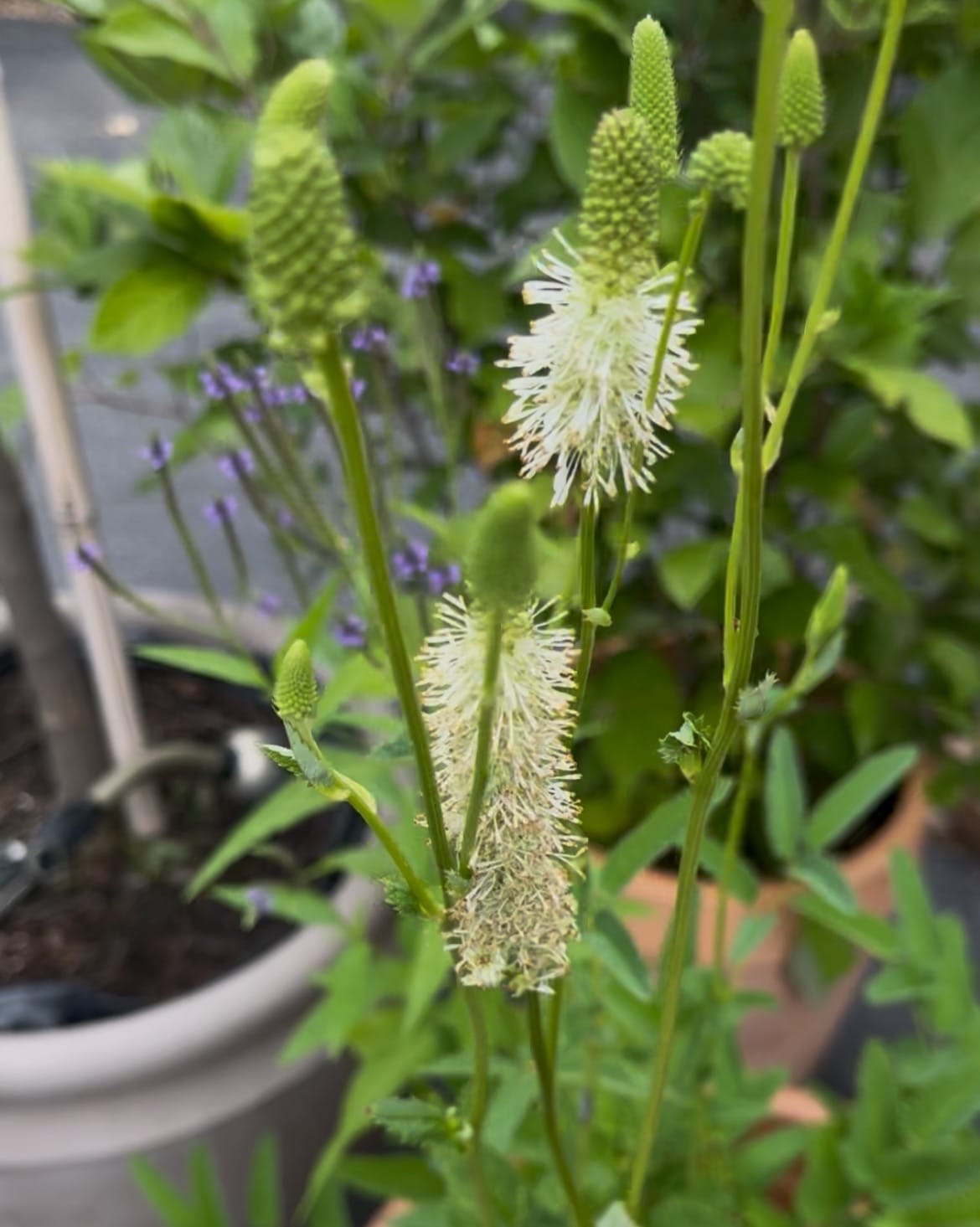
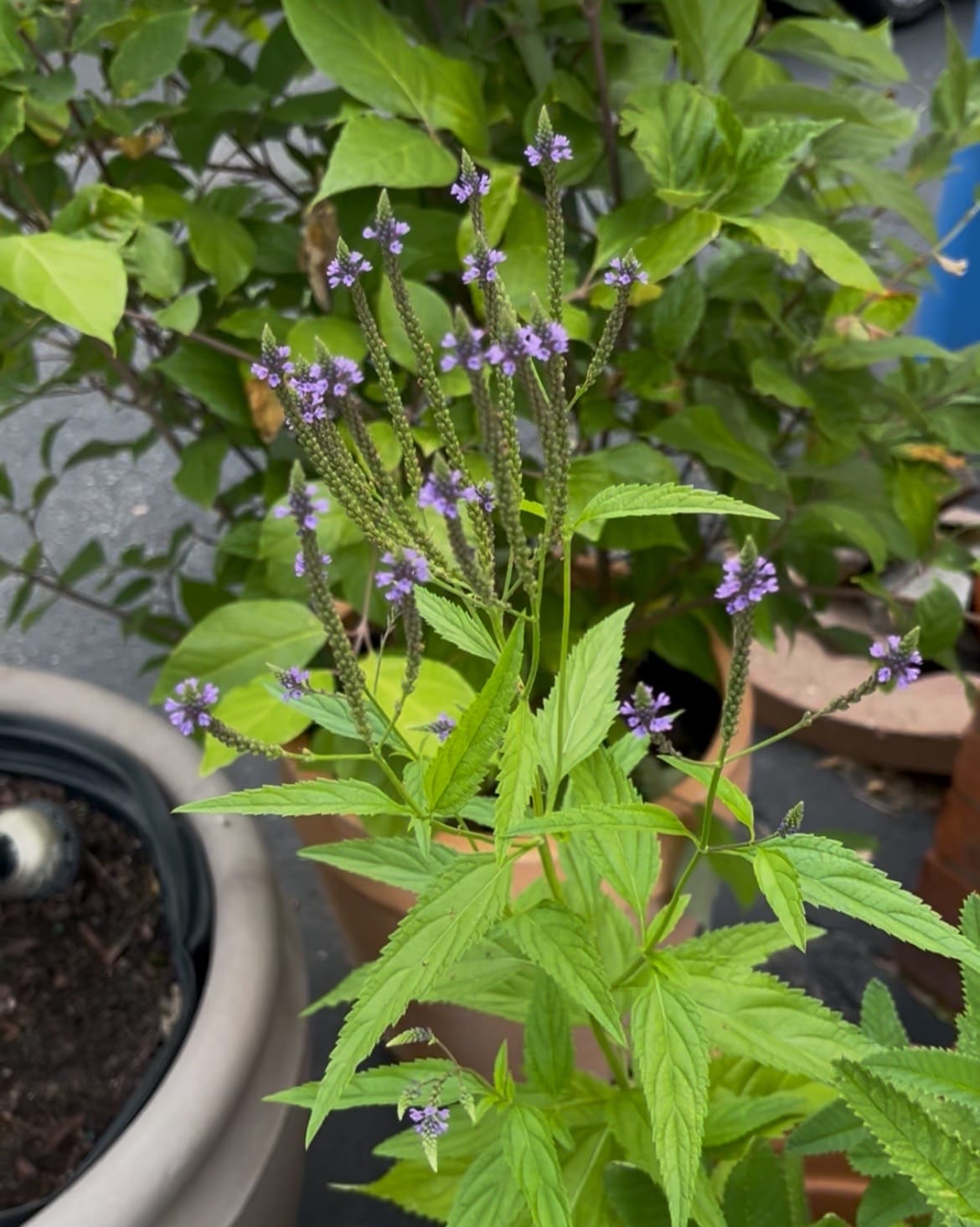
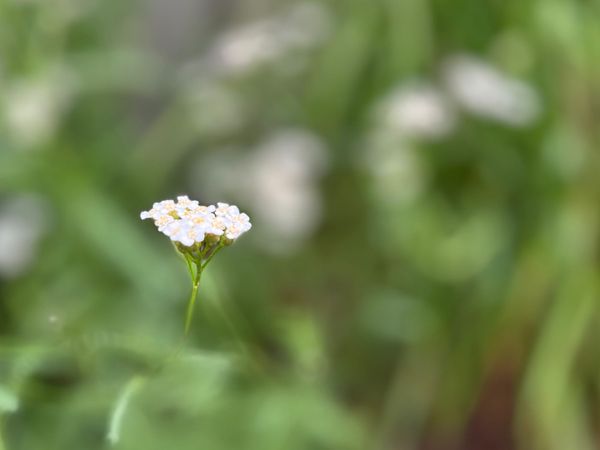
Last year’s white Am. burnet blooms with its blue vervain stowaway behind it, and close-up of the vervain at right.
• American burnet aka Canada burnet (Sanguisorba canadensis)
sun to part-sun, moist soil, 2'-3' mound with 4'-6' flower spikes
I bought a gallon plant from them last year and it quickly grew into a stunner — now planning to make a large clump of it in a boggy spot near our sump drain. The bees are absolutely mad about the tall white bottlebrush blooms, and I love the deep-cut foliage. It reminds me of the NZ plants I loved to grow in CA. The deer never touched it last year, but just chewed the tops off mine a couple of days ago (while leaving the vervain that came stowed away with it untouched) so only somewhat deer resistant.
• Blue vervain (Verbena hastata)
sun to part-sun, moist soil (or rich loam if drier), 3'-6'
The aforementioned volunteer in my American burnet purchase last year, this is a very pretty plant with exuberant foliage and a smaller, purple spike of a bloom in summer. Biennial but spreads via rhizomes, so something will bloom every year. Knowing it pairs great with the burnet, I plan to plant them together. Loved by pollinators, great winter seed source for birds, and as noted, the deer just munched the burnet it’s tangled up with, while leaving the vervain untouched! So it’s apparently of no interest to them. I’ll endeavor to use that to my advantage.
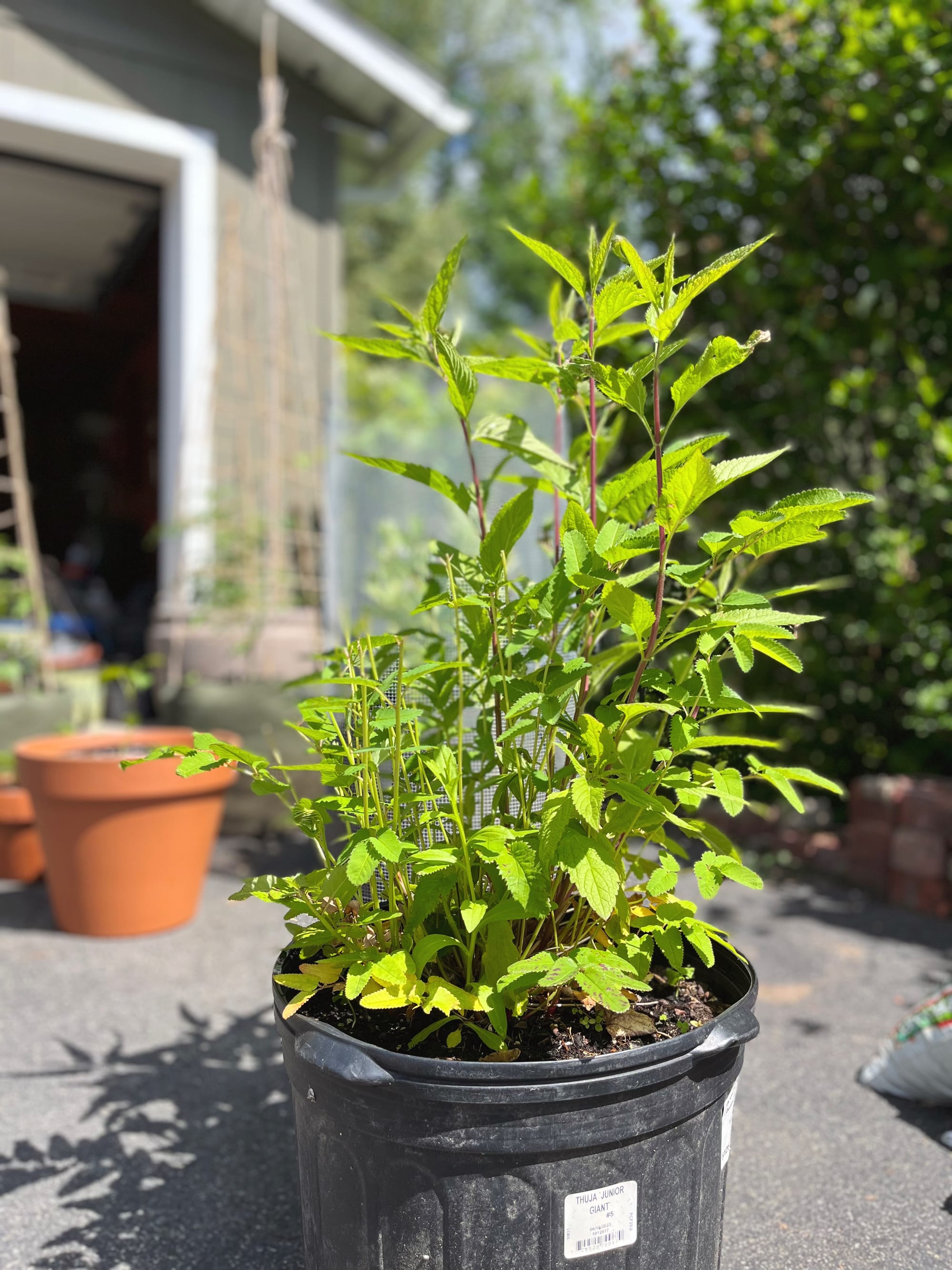
• Wild bergamot (Monarda fistulosa)
full-sun to part-shade, dry to moist soil, 3'-5'
I guess this and the verbena are the only medicinal plants that made the list. A member of the mint family, and one of my favorite scents, this one is a somewhat aggressive plant. Big, mauve to lilac, pompom-shaped blooms in mid-summer can be increased through pinching and deadheading. Doesn’t seem to care much where you put it! Barkaboom says: “A premier nectar plant to be included in any pollinator garden. Visited frequently by hummingbirds.” Being a mint, the deer won’t touch it, and it might even keep them away from its neighbors?
• Smooth blue aster (Symphyotrichum laeve*)
sun to part-sun, dry or moist soil (drought tolerant), 2'-4'
Of all the beautiful blurple asters and their wide native ranges, I chose this one because it’s also a keystone plant in my region, about as popular as a single plant can be to a vast variety of wildlife. Will bloom along with the goldenrod and boneset in late summer and fall. The plant is narrow and upright, well-behaved, so can be easily tucked in amongst other things, and it’s deer resistant. Kinda wishing I had gotten more than 10, but I trust it will spread.
• Little bluestem grass (Schizachyrium scoparium)
full- to part-sun, average to dry soil (drought tolerant), 2'-4'
A fairly upright grass with a huge native range that provides year-round garden interest (from blue-green emergence to coppery fall color to winter seed heads) as well as food and habitat for a wide variety of birds and pollinators, including as larval host to many moths. Deer, however, are not particularly interested in it.
• Eastern / Bottlebrush grass (Elymus hystrix)
part-sun to part-shade, average to dry soil (drought tolerant), 2'-3'
A slightly wilder/weedier (in a good way) grass, I believe. Can take filtered sun or light shade and will apparently tolerate clay soil as well as being drought tolerant. Makes pale green bottlebrush-shaped seed heads in summer, loved by birds, and is also a butterfly larval host. Emerges early spring, and deer don’t care for it.
• Blue-stemmed goldenrod aka wreath goldenrod (Solidago caesia)
part-sun to shade, dry or moist soil (drought tolerant), 1'-3'
There are several goldenrods that are keystone plants in my area, and I went with this lower-growing one for height variety overall, and because it’s less aggressive than the others. Blooms yellow from late summer to fall. It’s a woodland goldenrod, able to take dry shade, and will tolerate full sun only if given moisture. Appealing to birds and pollinators but not so much to deer. Arching form, will lean on its neighbors.
• Tall thimbleweed (Anemone virginiana)
full sun to part-shade, dry or moist soil (drought tolerant), 1'-2'
This is the one I’m most excited about and have a lot of! Planning to scatter it everywhere. A low-growing, native anemone with showy leaves, gorgeous little white blooms held aloft in late spring and summer, and striking seed heads that persist into winter. Not as aggressive as other anemones, deer resistant, and a larval host to several butterflies. Only thing it doesn’t like is deep shade.
Exciting, right?
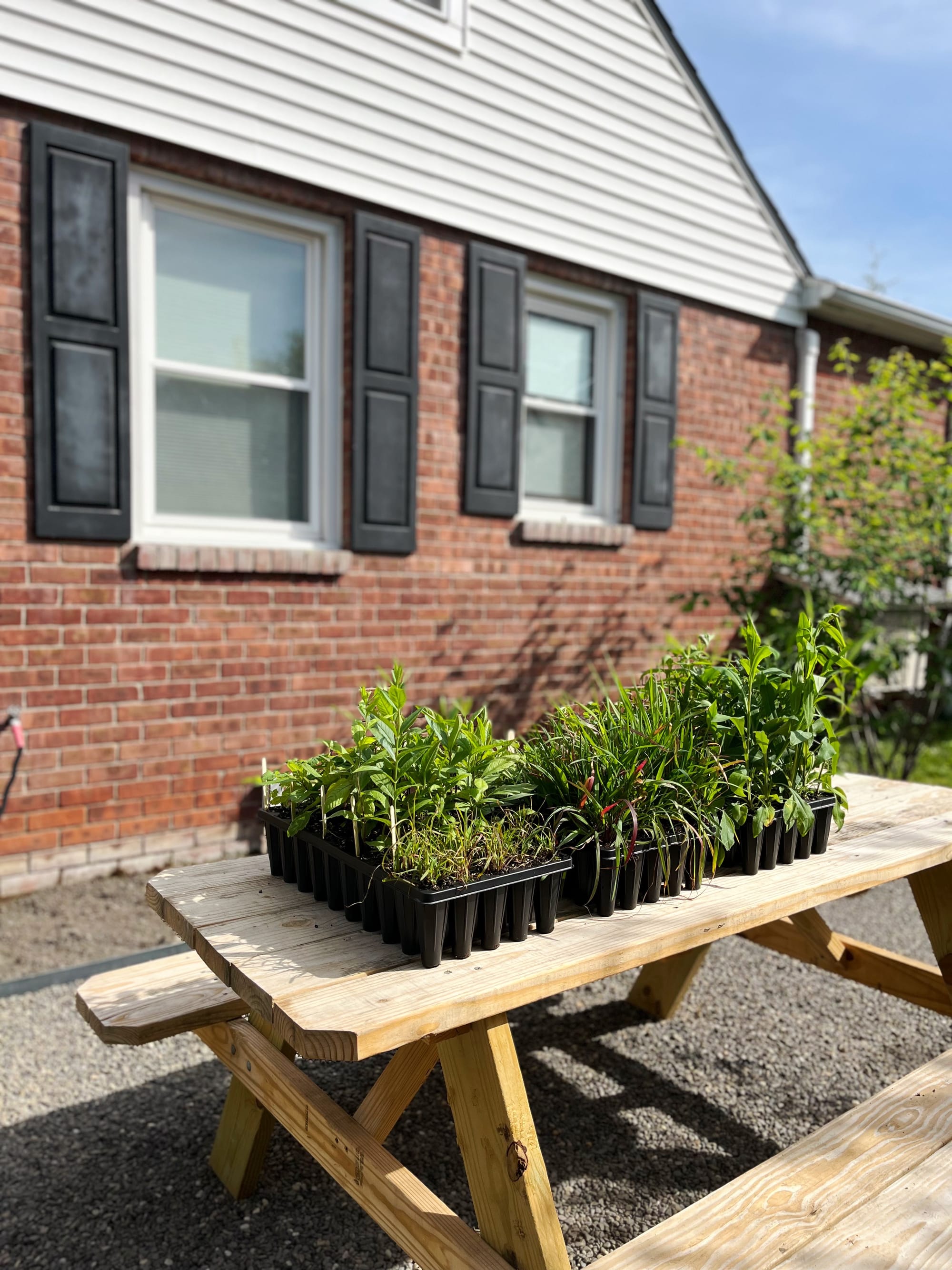
I also want to shout out Izel Plants, who you may have noticed most of my plant links go to these days. This site proved to be my top tool for researching native plants for my list over the winter. You can sort by plant type, native range, etc, to find dream plants for your own garden. The plant info is quite robust, and many/most things can be ordered through them in various sizes, making wholesale plants (including plug trays) available to the rest of us. Definitely give it a look!
.
NOTE: This post is not sponsored, no post here is sponsored. Just sharing great resources with you!